#TechTalk: When Waste Becomes Energy, Clean Air Still Matters
November 18, 2026 10:16 am#TechTalk: When Waste Becomes Energy, Clean Air Still Matters
Converting biomass and organic residuals into energy also means managing the process gases generated.
One pathway is pyrolysis: heating organic feedstocks without oxygen to break them down. Depending on the material and operating conditions, the process can produce biochar, liquid bio-oil, and combustible gases. These outputs may be used as fuels or upgraded into other energy products. Product mix and energy demand depend on feedstock, moisture, reactor design, and operating conditions.
Process gases can contain combustible compounds and volatile organic compounds (VOCs). Their composition and treatment requirements must be evaluated before they are reused or released. Effective emissions control is therefore an essential part of a well-designed biomass energy facility.
How Direct-Fired Thermal Oxidation Supports Cleaner Energy
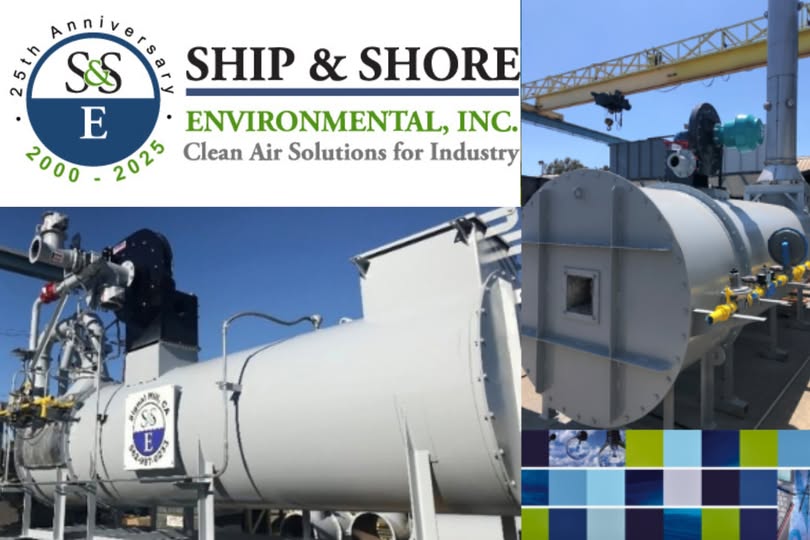
This is where Ship & Shore Environmental’s Direct-Fired Thermal Oxidizer (DFTO) technology can play an important role. An engineered DFTO uses controlled high-temperature combustion to oxidize VOCs and other combustible organic compounds in process exhaust.
Performance depends on the compounds present, gas flow and concentration, oxygen availability, temperature, residence time, and mixing. For qualifying applications, S&SE systems can be designed to achieve 99%+ VOC destruction, subject to project-specific conditions and performance requirements.
Recovering Useful Process Heat
Treated exhaust may also offer heat-recovery opportunities. With a suitable configuration, recovered energy may support feedstock drying, process heating, or other facility demands. The design must reflect exhaust characteristics and the plant’s overall heat balance.
Evaluating the Complete Emissions Profile
VOC control is only one part of emissions management. Depending on the feedstock and process, additional pollutants may include particulates, acid gases, sulfur compounds, carbon monoxide, and nitrogen oxides, potentially requiring dedicated collection or treatment equipment.
A DFTO is not a universal solution for every contaminant; claims involving PFAS or other persistent compounds require separate evaluation and validated testing.
S&SE evaluates each application using process data—including gas composition, flow rate, operating profile, emissions targets, heat-reuse opportunities, and permit requirements. Solutions can incorporate heavy-duty refractory construction, appropriately selected burners, Low-NOx options, monitoring instrumentation, and integrated heat recovery when suitable.
Cleaner energy requires cleaner process design. By combining engineered VOC control with practical energy-recovery strategies, Ship & Shore Environmental helps biomass and waste-conversion facilities pursue reliable operation, responsible emissions management, and more efficient use of process energy.
#TechTalk #Biomass #Pyrolysis #DFTO #VOCControl #HeatRecovery
Categorised in: Air pollution, DFTO, Green Energy, Industry news, News, News, RTO, Ship & Shore, Technology, TechTalk, VOC Abatement