
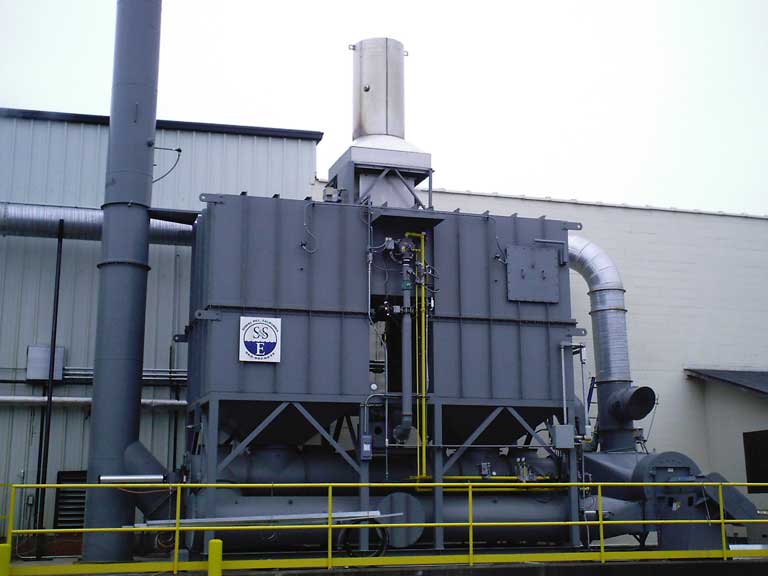
RTO Systems for Leather Manufacturing
Evaluate a regenerative thermal oxidizer for solvent-bearing leather finishing, coating and drying exhaust. Ship & Shore Environmental brings custom emissions-control engineering, heat-recovery options and aftermarket support to your facility-specific project.
- Finishing-line VOC control
- Exhaust capture and integration
- Regenerative heat recovery
- Service and maintenance
How Can an RTO Support Leather Manufacturing?
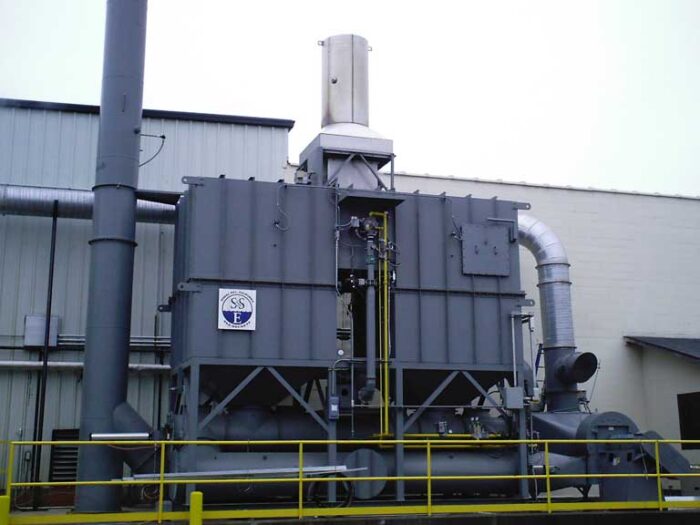
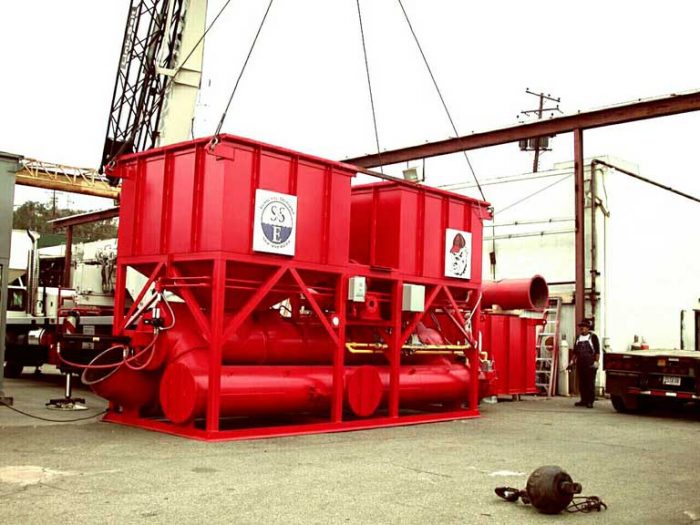
A regenerative thermal oxidizer treats compatible organic vapors in collected process exhaust using controlled high-temperature oxidation. Ceramic media recovers heat from the treated gas and transfers it to incoming exhaust, reducing the auxiliary energy required to maintain treatment conditions.
For leather manufacturing, the most relevant applications are often solvent-bearing finishing operations: spray or roller coating, flash-off areas and drying lines. An RTO system must be matched to the actual chemical mixture and operating envelope. Its suitability is not determined by whether a facility makes footwear leather, automotive upholstery, furniture leather or another finished product.
The Practical Starting Point
- Characterize each exhaust stream before selecting equipment.
- Separate VOC treatment from dust, droplets and wastewater management.
- Evaluate source capture as well as oxidizer destruction performance.
- Compare energy use, maintenance and integration over the system’s operating life.
Leather Processes and Air-Pollution Control Priorities
Finishing chemistry, application method and production schedules can change emissions substantially. Keep incompatible streams separate until their treatment and safety requirements have been evaluated.
| Process | Potential concern | Design priority |
|---|---|---|
| Spray and roller finishing | Solvent vapors, coating overspray and variable VOC loading. | Capture at the source; assess filtration and coating compatibility. |
| Flash-off and drying | Evaporating solvents, temperature variation and changing ventilation demand. | Match collection airflow and controls to line speed and drying requirements. |
| Solvent cleaning or degreasing, where used | Intermittent vapor peaks and changes in solvent composition. | Include cleaning cycles, safety data sheets and peak loads in the design basis. |
| Buffing and mechanical finishing | Leather dust and particulate. | Evaluate dedicated dust collection; do not treat an RTO as a particulate separator. |
| Wet-end tanning and associated operations | Process-dependent gases, odors, moisture and liquid wastes. | Assess separate gas treatment and wastewater systems; do not assume RTO suitability. |
Capture, Pretreatment and Safe System Integration
Collect the Intended Emissions
Collection-system design coordinates hoods, enclosures, ductwork and fans with production ventilation. Permanent total enclosures may be evaluated where suitable. Good oxidizer performance cannot compensate for emissions that are never captured.
Protect the Equipment
Coating aerosols, dust, condensables and moisture can affect valves, fans and ceramic media. Review upstream separation, access for cleaning and compatible materials. Dust collectors and scrubbers address different treatment needs and are selected for the actual stream.
Design for Changing Loads
Recipe changes, batch work and cleaning can alter VOC concentration. Evaluate solvent speciation, peak loading, interlocks and lower explosive limit considerations during engineering. Halogen-, sulfur- or other contaminant-bearing compounds require specific review.
Heat Recovery and Technology Selection
Regenerative heat exchange is part of the RTO itself. Secondary heat recovery is a separate opportunity that depends on usable energy and a matching facility heat demand. Any connection to leather drying must preserve product quality, ventilation balance and required process temperatures.
Airflow, solvent loading, production hours and local utility costs influence operating economics. Compare an RTO with catalytic oxidation or other suitable approaches where chemistry and operating conditions support them. Hybrid gas/electric RTO systems also require a facility-specific assessment of electrical capacity, fuel supply and lifecycle cost. No universal savings or compliance outcome should be assumed.
What We Need for a Leather Finishing RTO Evaluation
A useful proposal begins with a documented operating envelope. Share the information available; our air-pollution abatement system-design services can help frame the remaining engineering questions.
Process and Exhaust
- Coating, finishing and cleaning formulations, including safety data sheets.
- Minimum, normal and peak airflow, exhaust temperature and moisture.
- VOC composition, concentration, mass loading and available test data.
- Overspray, buffing dust, condensables and potentially corrosive contaminants.
- Line speeds, production shifts, cleaning cycles and simultaneous operation.
Facility and Project
- Capture equipment, ductwork, fan data and required process pressures.
- Permit conditions, control requirements and monitoring obligations.
- Site layout, utilities, maintenance access and expansion plans.
- Installation windows and commissioning requirements.
- Existing energy demand that could use recovered heat.
Overall control depends on both capture efficiency and treatment performance. Confirm applicable requirements with the facility’s permitting authority. EPA’s Leather Finishing Operations NESHAP overview addresses hazardous air pollutants from covered operations; it does not mean every leather facility has the same obligations.
From Finishing-Line Planning to Aftermarket Support
A new finishing line, plant expansion or oxidizer replacement each brings different integration requirements. SSE’s equipment-installation services and aftermarket support connect equipment selection with commissioning, inspection, troubleshooting and maintenance.
Explore related applications in paint and surface coating and spray booth operations. For technical background on oxidation and performance monitoring, see EPA’s thermal oxidizer guidance.
Leather Manufacturing RTO FAQs
Does every leather manufacturing facility need an RTO?
No. The need for an oxidizer depends on the finishing formulations, solvent emissions, production rate, existing controls and applicable permit requirements. A source-specific assessment should establish both the need for treatment and the appropriate technology.
Which leather manufacturing processes may be suitable for RTO treatment?
Captured organic vapors from solvent-based coating, finishing, flash-off and drying operations may be candidates. Suitability depends on airflow, VOC composition and loading, moisture, contaminants and operating patterns. Wet-end gases and dust require separate evaluation.
Can an RTO remove leather buffing dust or treat tannery wastewater?
An RTO is designed for compatible gas-phase organic pollutants, not wastewater treatment or dust collection. Buffing dust, coating overspray and liquid droplets may require upstream separation. Tanning wastewater and metal-bearing wastes need their own treatment systems.
Can water-based leather finishes still produce air emissions?
Yes. Water-based does not automatically mean zero VOC or zero hazardous air pollutants. Review coating and cleaning-product safety data sheets, actual formulations and emissions data to establish the exhaust composition and applicable obligations.
Can recovered RTO heat support leather drying?
Additional heat recovery may be feasible when the treated exhaust provides usable energy and the drying process has a compatible heat demand. The design must protect product quality, pressure control, safety and emissions performance. Energy savings are project-specific.
What information should I provide for a leather finishing RTO proposal?
Provide coating and solvent information, safety data sheets, exhaust flow and temperature, VOC concentration and mass loading, production schedules, particulate and moisture data, site layout, utilities and permit requirements. Include cleaning cycles and planned production changes.
Discuss Your Leather Emissions-Control Project
Tell Ship & Shore about your finishing process, exhaust conditions and project goals. We can help evaluate the next steps for a new system, expansion or replacement.
Explore all industries served or the RTO glossary.