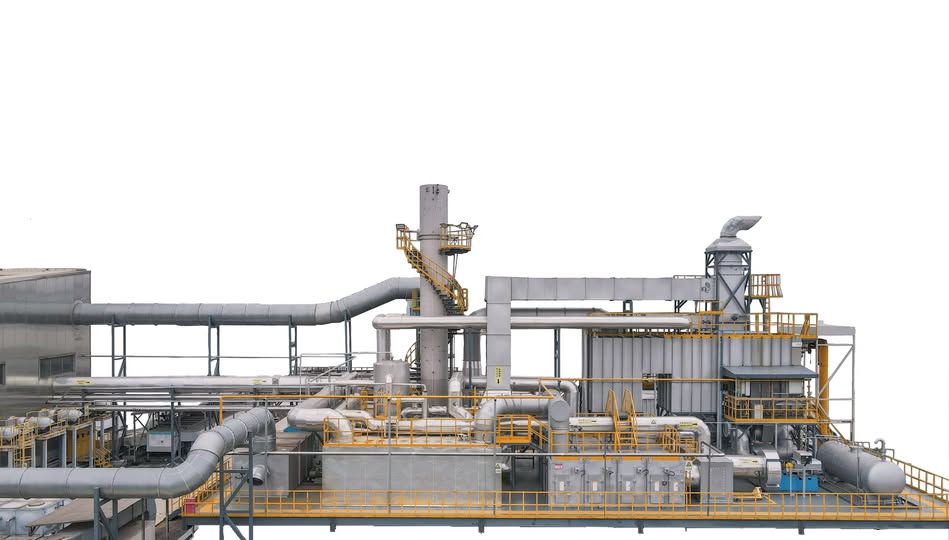
RTO Systems for the Space Industry
Ship & Shore Environmental engineers regenerative thermal oxidizers and integrated air pollution control systems for applicable VOC and volatile HAP exhaust generated during spacecraft, satellite, launch-vehicle, propulsion-hardware, composite, coating, cleaning, curing, electronics, and ground-test operations.
- Spacecraft and satellite production
- Launch-hardware manufacturing
- Composite and coating exhaust
- Custom controls and integration
What Is a Space Industry RTO System?
A space industry regenerative thermal oxidizer is a ground-based industrial air pollution control system designed to treat applicable organic vapors collected from manufacturing, coating, cleaning, bonding, curing, rework, or test-support processes associated with spacecraft and launch hardware. Regenerative ceramic media recovers heat from treated air and transfers it to the incoming exhaust, reducing the auxiliary energy required for oxidation.
The complete system can include source capture and collection ductwork, fans, filtration or other pretreatment, an RTO or alternate oxidizer, controls, monitoring, stack, and downstream treatment. Ship & Shore selects and sizes these elements from facility-specific process and permit requirements.
Where VOC and HAP Emissions Can Originate in Space Manufacturing
Space hardware programs often combine specialized materials with strict quality and contamination-control requirements. The emission inventory should identify each process, enclosure, schedule, and material rather than treating the facility as one uniform source.
Primer and topcoat application
Spray booths and finishing lines can release organic solvents from corrosion-control, thermal-control, protective, and specialty coatings.
Composite layup and cure
Resins, prepregs, release agents, and cure cycles can generate variable vapor loads from ovens, autoclaves, and work areas.
Adhesives and sealants
Bonding, potting, gasketing, and sealing operations can emit solvents or reactive organic constituents during application and cure.
Cleaning and degreasing
Hand-wipe, flush, equipment, and precision-cleaning processes can create intermittent solvent exhaust and fugitive emissions.
Electronics and conformal coating
Printed circuit, sensor, power, and avionics production can release organic vapors from coating, cleaning, underfill, and curing steps.
Bakeout and thermal processing
Controlled heating can drive moisture and volatile constituents from materials, components, coatings, and assembled hardware.
Propulsion-hardware fabrication
Machining support, cleaning, coating, bonding, and cure operations can create treatable exhaust distinct from propellant-use emissions.
Rework and depainting
Repair, coating removal, touchup, and component refurbishment can produce changing organic and particulate loads.
Research and test support
Prototype builds and development campaigns can introduce new materials, short runs, and uncertain peak-to-average ratios.
How an RTO Treats Applicable Space-Manufacturing Exhaust
A complete system captures the source, conditions the gas when needed, oxidizes organic pollutants within an engineered envelope, and recovers heat before discharge.
- 1Capture exhaustBooths, ovens, autoclaves, and hoods collect process air.
- 2Condition the streamFiltration or other pretreatment protects downstream equipment.
- 3Control airflowFans, dampers, and manifolds manage operating airflow cases.
- 4Recover heatHot ceramic media preheats incoming exhaust.
- 5Oxidize organicsTime, temperature, turbulence, and oxygen drive treatment.
- 6Store outgoing heatThe outlet bed absorbs energy from treated air.
- 7Reverse and monitorValves alternate beds while controls verify operation.
Capture efficiency is part of overall control
An oxidizer can only treat the exhaust that reaches it. Spray booths, oven seals, autoclave vents, hoods, duct balance, production interlocks, and building-pressure effects must be evaluated along with oxidizer destruction efficiency.
Space Manufacturing Processes and RTO Design Considerations
The same facility may need different capture or pretreatment strategies for coatings, composite cure, electronics, cleaning, and specialty test operations.
| Process | Potential exhaust | Design considerations |
|---|---|---|
| Spray coating and finishing | Solvent vapors, organic HAPs, overspray, and changing coating recipes. | Booth capture, particulate filtration, production interlocks, airflow turndown, and permit limits. |
| Composite layup and cure | Resin constituents, release agents, solvents, and cure-cycle peaks. | Autoclave or oven vent sequencing, condensables, peak loading, and batch buffering. |
| Adhesive and sealant cure | Organic vapor from mixing, application, flash-off, and curing. | Local capture, low-volume sources, intermittent schedules, and shared-duct compatibility. |
| Cleaning and degreasing | Solvents from hand-wipe, flush, vapor, or equipment cleaning. | Enclosures, solvent segregation, peak events, housekeeping, and recovery options. |
| Electronics and conformal coating | Coating solvent, cleaning vapor, underfill, and cure exhaust. | Low flows, multiple tools, contamination control, and production expansion. |
| Bakeout and thermal test support | Low or variable organic loading from materials and assembled hardware. | Analytical characterization, vacuum-pump interfaces, low concentration, and alternate capture methods. |
| Propulsion-related operations | Potentially reactive, corrosive, toxic, particulate, or oxygen-rich streams. | Dedicated process-hazard review and specialized treatment; do not assume standard RTO suitability. |
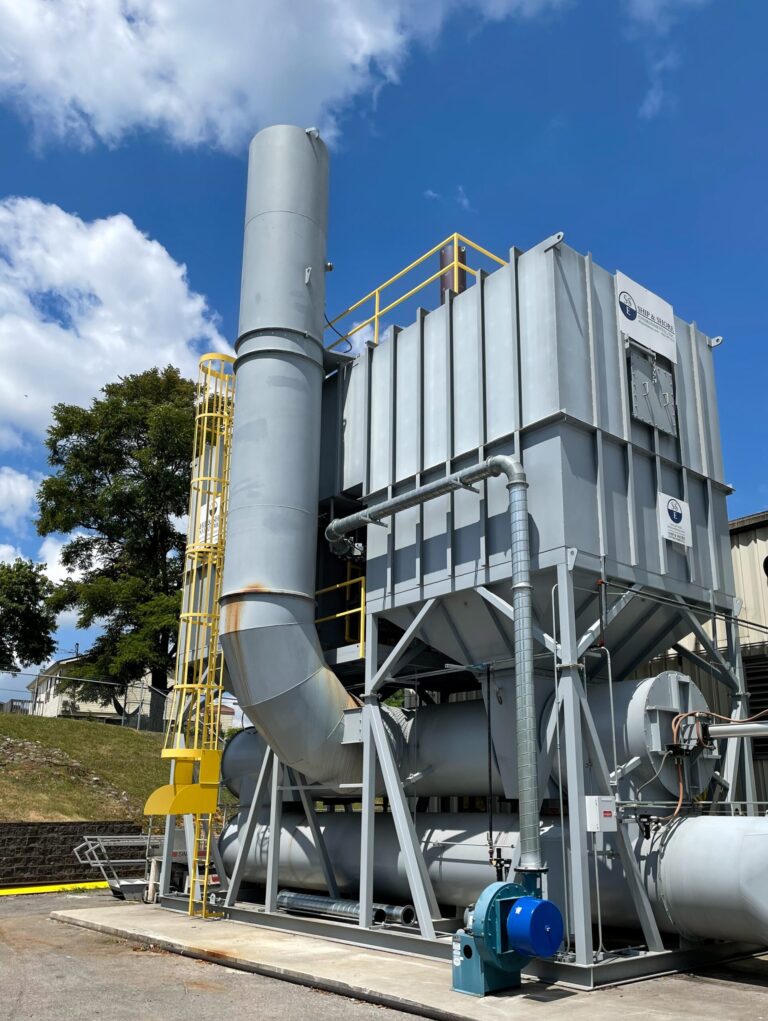
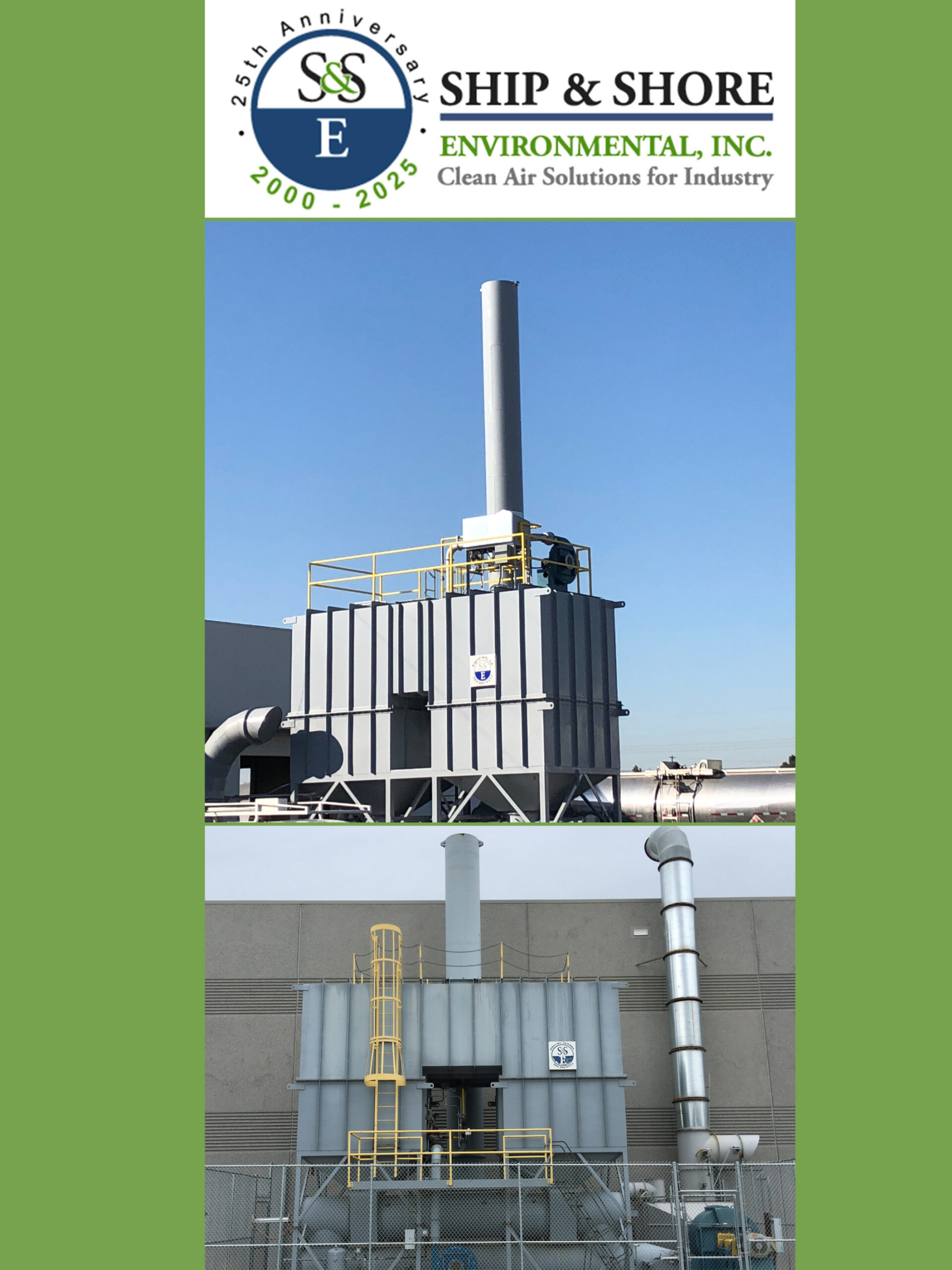
Representative Emissions-Control Systems for Space-Related Manufacturing
These Ship & Shore systems serve related composite and carbon-fiber manufacturing processes that can share source types with advanced spacecraft production. They are presented as representative industrial experience, not as specific spacecraft or launch-program installations.
Where Regenerative Oxidation May Fit
- Collected solvent vapor from coating, flash-off, and curing operations.
- Applicable volatile HAP exhaust from ground-based manufacturing and rework.
- Composite resin, release-agent, or adhesive exhaust after compatibility review.
- Multiple dilute organic sources that can be safely combined and balanced.
- Continuous or batch processes where regenerative heat recovery supports lifecycle goals.
Where an RTO May Not Be the Complete Answer
- Launch exhaust or onboard spacecraft trace-contaminant control.
- Reactive propellant, oxidizer, oxygen-rich, or explosive process streams.
- Metal particulate, inorganic HAP, acid gas, or high aerosol loading.
- Very low-concentration exhaust where capture, adsorption, or recovery is more practical.
- Streams containing catalyst poisons, silicone, halogens, or condensables without pretreatment review.
What Ship & Shore Evaluates Before Designing a Space Industry RTO
The design basis should represent production, development, rework, maintenance, and future program conditions. Ship & Shore evaluates the process stream, capture system, utilities, site, and permit together.
Process stream
- SCFM or ACFM and temperature
- VOC and HAP composition and loading
- Concentration, variability, and percent LEL
- Moisture, aerosol, and particulate loading
- Halogens, sulfur, nitrogen, silicone, and corrosives
Operating profile
- Production recipes and campaign schedule
- Autoclave, oven, and booth cycles
- Startup, shutdown, purge, and upset cases
- Simultaneous and future source operation
- Redundancy and maintenance windows
Performance
- Required capture and destruction efficiency
- Permit and testing conditions
- Monitoring and data-recording requirements
- Bypass and production interlocks
- Pretreatment or downstream treatment needs
Site integration
- Secure access and installation sequencing
- Footprint, height, and structural loads
- Fuel, power, compressed air, and controls
- Existing ductwork and fan duty
- Program growth and future equipment
Custom Space Manufacturing Emissions Control From Concept Through Commissioning
Ship & Shore integrates process review, capture, thermal oxidation, heat recovery, controls, fabrication, installation, commissioning, training, and lifecycle support around the facility’s operating and quality requirements.
- Source surveyMap booths, ovens, autoclaves, work cells, and test-support exhaust.
- Process modelingDevelop normal, peak, batch, future, and upset design cases.
- Technology selectionCompare RTO, electric thermal oxidation, alternate oxidation, recovery, and pretreatment.
- Capture designCoordinate hoods, enclosures, ducts, fans, balance, and interlocks.
- FabricationUse coordinated fabrication and assembly for custom equipment and controls.
- InstallationPlan equipment installation, lifts, foundations, utilities, tie-ins, and production coordination.
- CommissioningBalance airflow, tune controls, prove sequences, and train operators.
- Lifecycle supportProvide inspections, controls support, parts, troubleshooting, and service.
Space Industry RTO Performance Is Application-Specific
Ship & Shore establishes performance criteria from the pollutant mix, source capture, flow cases, permit, and approved operating envelope. General RTO figures should not be treated as a guarantee for every space-manufacturing process.
- Capture basis
- Defined hoods, enclosures, booth balance, oven vents, and operating scenarios.
- Pollutant basis
- Compound-specific inlet concentration and mass rate for each design case.
- Oxidation criteria
- Engineered temperature, residence time, mixing, oxygen, and operating margin.
- Heat recovery
- Media selection and thermal effectiveness aligned with process chemistry and pressure drop.
- Controls
- Production interlocks, alarms, bypass logic, data recording, and secure remote options where approved.
- Verification
- Commissioning and permit testing under representative production conditions.
Space Manufacturing Applications for RTO Systems
Ship & Shore can evaluate applicable organic exhaust from component suppliers, prime contractors, research facilities, and integrated manufacturing campuses.
Aerospace, Composite, Coating, and Thermal-Processing Experience
Ship & Shore provides custom emissions-control equipment for aerospace manufacturing as well as composite, carbon-fiber, paint, coating, electronics, and other advanced manufacturing processes. Its broader equipment portfolio also includes industrial autoclaves for precision thermal processing.
A space-industry project is evaluated on its own process data and quality requirements. This page does not claim that every aerospace control configuration is transferable to spacecraft or launch-hardware production without review.
Related resources include RTO systems for aerospace manufacturing, composites and carbon-fiber emissions control, industrial autoclaves, and aftermarket service.
Page updated: August 28, 2026. Project-specific performance requires Ship & Shore engineering review.
Frequently Asked Questions About RTOs for the Space Industry
What is a space industry RTO system?
A space industry RTO is a ground-based regenerative thermal oxidizer designed to treat applicable organic vapor collected from spacecraft, satellite, launch-hardware, composite, coating, cleaning, bonding, curing, rework, or test-support operations. The exact capture and treatment system is engineered from the facility process and permit requirements.
Is the space industry page the same as the Ship & Shore aerospace page?
No. The aerospace page addresses aircraft and aerospace manufacturing broadly. This page focuses on ground-based spacecraft, satellite, launch-vehicle, propulsion-hardware, composite, electronics, coating, cleaning, curing, and test-support operations. The two topics are related but serve different buyer and process questions.
Which space manufacturing processes can generate VOC emissions?
Potential sources include primer and topcoat application, composite layup and cure, release agents, adhesive bonding, sealants, solvent cleaning, degreasing, conformal coating, electronics production, bakeout, depainting, rework, and selected thermal-processing or test-support operations. Materials and emissions vary by facility.
Can an RTO treat composite curing exhaust?
An RTO may be suitable for applicable organic vapor from composite layup, ovens, or autoclaves. Ship & Shore evaluates resin chemistry, release agents, solvents, cure-cycle peaks, condensables, aerosols, silicone, halogens, airflow, and operating schedules before defining capture, pretreatment, and oxidation requirements.
Can coating and solvent-cleaning exhaust share one RTO?
Possibly. Combining sources can improve equipment utilization, but only when the streams are chemically compatible and the collection system can control simultaneous flow, concentration, temperature, particulate, and percent LEL. Batch peaks, cleaning events, production interlocks, and future expansion must be included in the design basis.
Can an RTO treat thermal-vacuum or bakeout exhaust?
Some bakeout exhaust may contain treatable organic vapor, but low pressure, low concentration, vacuum-pump interfaces, moisture, condensables, and contamination-control requirements can make another capture or treatment method more practical. Analytical data and the actual test sequence are needed before selecting an RTO.
Is an RTO used to control rocket launch exhaust?
This page does not present a regenerative thermal oxidizer as a launch-plume control system. Launch exhaust differs fundamentally from stationary manufacturing ventilation. Any launch-related control requirement would need a dedicated propulsion, safety, environmental, and permitting analysis.
Can propellant or oxidizer fumes be routed to a standard RTO?
They should not be assumed suitable. Reactive propellant, oxidizer, oxygen-rich, corrosive, toxic, particulate, or explosive streams require a dedicated process-hazard and treatment review. Specialized capture, neutralization, scrubbing, destruction, or segregation may be required.
Could an electric RTO support a space manufacturing facility?
An electric RTO may be evaluated when the organic exhaust chemistry is suitable and the facility has adequate electrical capacity, reliability, and lifecycle justification. Ship & Shore compares electric, gas-fired, hybrid, and other control configurations using process data, utility costs, permit needs, and operating schedules.
What destruction efficiency can a space industry RTO achieve?
Destruction removal efficiency is established for the specific compounds, capture system, operating temperature, residence time, mixing, oxygen, flow, loading, and permit. A general RTO percentage should not be treated as a guarantee for every space-manufacturing process.
What information does Ship & Shore need to evaluate a project?
Useful inputs include the process and source list, compound names and mass rates, SDS information, airflow and temperature cases, oxygen, moisture, percent LEL, particulate and condensables, production cycles, startup and upset cases, capture details, permit criteria, utilities, site layout, and future program growth.
How can an RTO integrate with an autoclave or curing oven?
The design coordinates exhaust timing, vent valves, purge cycles, pressure interfaces, fan control, minimum ventilation, batch peaks, condensable management, production interlocks, and safe startup and shutdown sequences. Multiple autoclaves or ovens may require staged or buffered operation.
Which regulations apply to space manufacturing emissions?
Requirements depend on the facility, process, pollutants, source classification, and jurisdiction. Aerospace manufacturing and rework rules may apply to certain space vehicles and components, and state or local permits can add VOC, HAP, coating, capture, testing, and recordkeeping conditions. The permitting authority should confirm applicability.
Does Ship & Shore provide installation and ongoing service?
Yes. Ship & Shore provides custom engineering, fabrication, installation support, commissioning, operator training, controls assistance, inspections, preventive maintenance, troubleshooting, replacement parts, and 24/7 technical support for applicable air pollution control systems.
Technical Sources
- U.S. EPA: Aerospace Manufacturing and Rework Facilities NESHAP
- U.S. EPA: VOC Control Techniques Guidelines for Aerospace Manufacturing and Rework
- U.S. EPA: Monitoring by Control Technique – Thermal Oxidizer
- NASA: Molecular Adsorber Coating and Spacecraft Material Outgassing Context
- NASA Technical Reports Server: High-Risk Spacecraft Materials Offgassing
Evaluate Your Space Manufacturing Exhaust With Ship & Shore
Share the source list, materials, SDS information, airflow cases, production cycles, permit criteria, utilities, and site constraints. Ship & Shore can compare RTO, electric RTO, alternate oxidation, pretreatment, capture, and other suitable approaches on technical and lifecycle grounds.