
Short answer: Ship & Shore Environmental designs regenerative thermal oxidizer systems for coil coating operations that need to control VOC emissions from cleaning, coating, mixing, and oven exhaust. RTO selection is based on exhaust flow, solvent loading, operating schedule, collection points, permitting requirements, and opportunities to recover heat for the manufacturing process.
RTO Solutions for Coil Coating Operations
VOC Control for Coil Coating Lines
Coil coating lines commonly combine cleaning, chemical pretreatment, primer application, top coating, drying, curing, cooling, and rewinding. Ship & Shore Environmental has published coil-coating guidance identifying solvent-based cleaning and coating operations as sources of volatile organic compound (VOC) emissions. The same guidance identifies collection points that can include cleaning areas, paint application, oven exhaust, and paint mix or storage rooms.
Ship & Shore designs regenerative thermal oxidizer (RTO) systems and supporting equipment around the line layout, exhaust flow, solvent loading, operating schedule, and air-quality requirements of each facility.
Information Needed for an RTO Project
A preliminary review helps match the RTO configuration, collection system, controls, and heat-recovery approach to the facility. The following information gives the engineering team a useful starting point.
| Project input | Why it matters |
|---|---|
| Process sources | Cleaning, chemical pretreatment, primer and topcoat application, curing ovens, and mix or storage areas may require separate collection review. |
| Exhaust flow and temperature | Normal and peak SCFM, temperature range, and fan conditions influence sizing and system integration. |
| VOC and HAP profile | Contaminant names, concentrations, variability, and operating conditions guide combustion, controls, and permit review. |
| Schedule and future production | Line speed, production cycles, operating hours, and planned expansion help avoid an undersized or inflexible design. |
| Moisture, particulate, and corrosion | Water content, particulate loading, and corrosive compounds affect pretreatment, materials, media selection, and maintenance planning. |
| Permitting and heat recovery | Permit limits, reporting needs, available utilities, site constraints, and process heat demand shape the final project scope. |
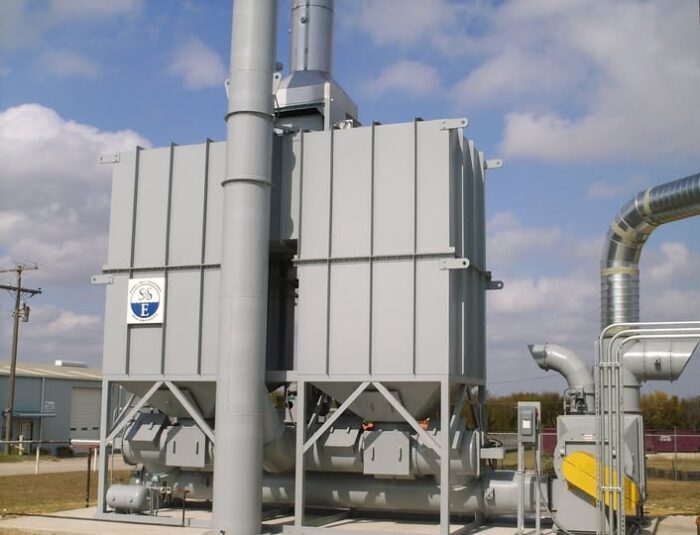
How an RTO Supports Coil Coating Emissions Control
An RTO routes collected VOC-laden air into a high-temperature combustion chamber where the pollutants are oxidized. Structured ceramic media captures and reuses heat as airflow cycles through the system, reducing the amount of supplemental fuel needed for operation. Ship & Shore’s published coil-coating guidance describes RTO performance of approximately 95% thermal efficiency and 98% to 99% destruction efficiency, depending on the system design and process conditions.
For a coil coating facility, the RTO is part of a larger emissions control system that includes collection ductwork, process interfaces, controls, and safe handling of changing production conditions.
Industry-Specific Design Considerations
- VOC collection from cleaning, paint application, curing ovens, and mixing or storage areas
- Changing line speeds, coating chemistry, solvent concentration, and exhaust flow
- Integration with existing recuperative oxidizers or other abatement equipment
- Heat recovery opportunities for pretreatment, oven makeup air, steam, hot water, or other process needs
- Air permit requirements, utility incentive eligibility, and future production changes
Energy Recovery and Operating Efficiency
RTOs recover thermal energy through ceramic heat exchange media, and additional heat recovery equipment can extend that benefit into the manufacturing process. Ship & Shore’s coil-coating resources describe recovering heat from curing ovens and abatement equipment for uses such as pretreatment cleaning, oven makeup air, and preheating the incoming emissions stream. Qualifying projects may also be considered for utility rebates or other incentives when available.
Ship & Shore has also documented a metal coil coating project in which an RTO was selected to replace a less efficient recuperative oxidizer. The project overview describes a 7,000 SCFM system, approximately 95% heat recovery, lower natural-gas demand, and improved VOC collection efficiency. Read the coil coating RTO project overview.
Permitting, Integration, and Long-Term Support
Ship & Shore approaches each project as an engineering partnership. The team can support process review, emissions analysis, system design, fabrication, installation, commissioning, and ongoing aftermarket service. The coil coating VOC and energy recovery guide provides additional context on collection points, thermal oxidation, and process heat recovery.
FAQs About Coil Coating RTOs
Which parts of a coil coating line need VOC collection?
Collection points can include solvent cleaning, paint application, curing ovens, and paint mixing or storage areas. Each source requires review when designing a coil coating RTO system.
How do changing production speeds affect RTO design?
Line speed, coating chemistry, solvent loading, and exhaust flow influence sizing and controls. Ship & Shore considers operating variations and planned expansion.
Where can recovered heat benefit coil coating operations?
Additional heat recovery equipment can supply pretreatment cleaning, oven makeup air, or exhaust preheating, depending on plant heat demand.
Can an RTO replace an existing recuperative oxidizer?
Yes, following evaluation. Ship & Shore documents a coil coating replacement project that improved heat recovery and reduced natural-gas demand.
Why assess moisture and particulate before selecting equipment?
Moisture, particles, and corrosive compounds influence pretreatment, construction materials, ceramic media selection, and maintenance planning.
Who supports integration and commissioning?
Ship & Shore provides process review, system design, fabrication, installation, commissioning, and ongoing aftermarket service for coil coating emissions control projects.
Related Ship & Shore Resources
Regenerative Thermal Oxidizers | Heat Exchangers | Industries Served | Air Permit Compliance
Request a project review
Every facility has a different exhaust profile, operating schedule, layout, and permitting context. Ship & Shore Environmental reviews the process data, evaluates the emissions control requirements, and develops a custom solution for the application. Request a quote to begin a conversation with the Ship & Shore engineering team.