
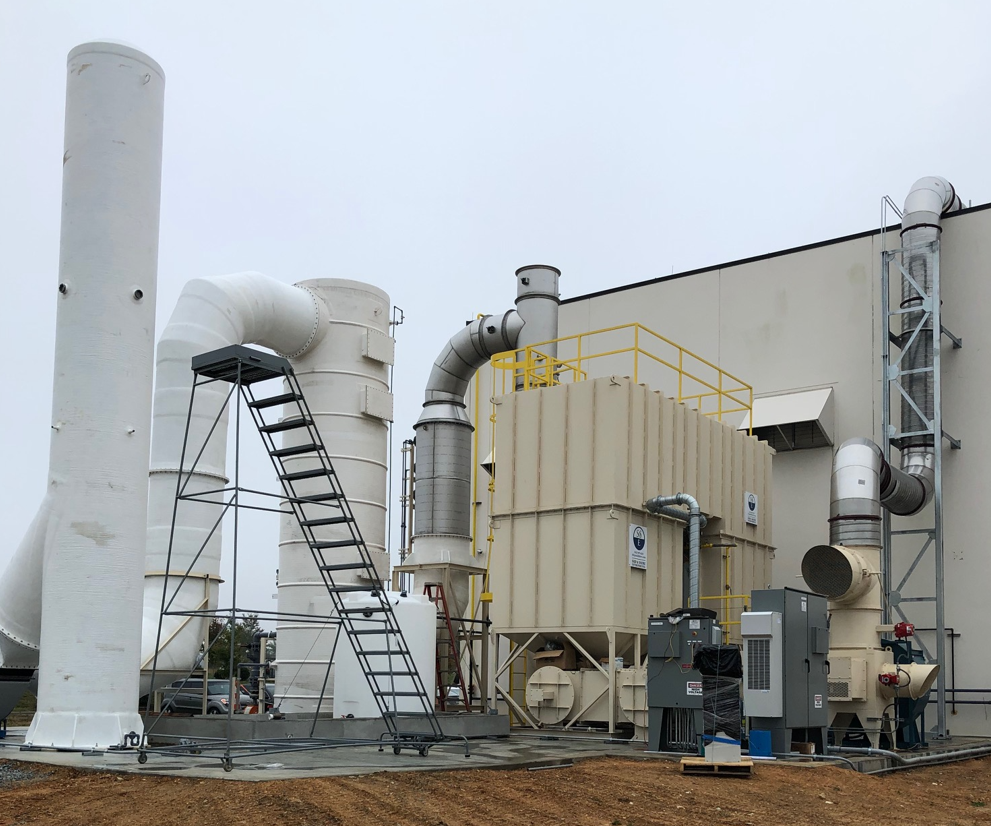
RTO Systems for HFO and HCFO Manufacturing
Ship & Shore Environmental engineers application-specific air pollution control systems for hydrofluoroolefin (HFO), hydrochlorofluoroolefin (HCFO), and related fluorochemical process streams. Depending on the chemistry and operating envelope, the treatment train may combine a regenerative or direct-fired thermal oxidizer with quenching, acid-gas scrubbing, corrosion-resistant materials, and integrated controls.
- Speciated process-stream review
- Oxidation and heat recovery
- Quench and acid-gas scrubbing
- Custom controls and materials
What Does HFCO Mean in Fluorochemical Manufacturing?
HFCO is a less-common notation used in some patents, product literature, and regulatory records for certain fluorinated olefins. The broader industry more commonly uses HFO for hydrofluoroolefin and HCFO for hydrochlorofluoroolefin. These unsaturated fluorochemicals are used in applications such as refrigerants, foam-blowing agents, solvents, and specialty thermal-management products.
For air pollution control, the label is only the starting point. Ship & Shore evaluates the exact compounds, byproducts, carrier gases, oxygen content, moisture, concentration, flow, temperature, and operating schedule before recommending a treatment method.
Where HFO, HCFO, and Fluorochemical Emissions Can Originate
A fluorochemical facility can generate continuous, batch, maintenance, and upset-related exhaust with very different treatment requirements. A useful design inventory separates each source rather than combining every vent by default.
Reaction vents
Reactors and synthesis steps can release unreacted feedstock, product vapor, intermediates, and reaction byproducts.
Separation and purification
Distillation, flashing, stripping, and purification systems can produce concentrated or variable off-gas streams.
Vacuum systems
Vacuum pumps, ejectors, and condensers may discharge low-flow streams containing fluorinated organics and carrier gases.
Storage and transfer
Tank breathing, loading, unloading, blending, and product transfer can create intermittent vapor loads.
Container filling
Cylinder, drum, tote, and bulk-container operations can generate displacement vapors and residual product emissions.
Equipment cleaning
Solvent cleaning, purging, maintenance, and turnaround work can create short-duration peaks unlike normal production.
Recovery and destruction
Reclamation, recovery, and dedicated destruction processes require a complete inlet and outlet fluorinated-gas balance.
Fugitive collection
Enclosures and local capture may collect leaks or displaced vapors that cannot be managed solely through equipment seals.
Pilot and research operations
Campaign changes and development work can introduce new compounds, low utilization, and rapidly changing load profiles.
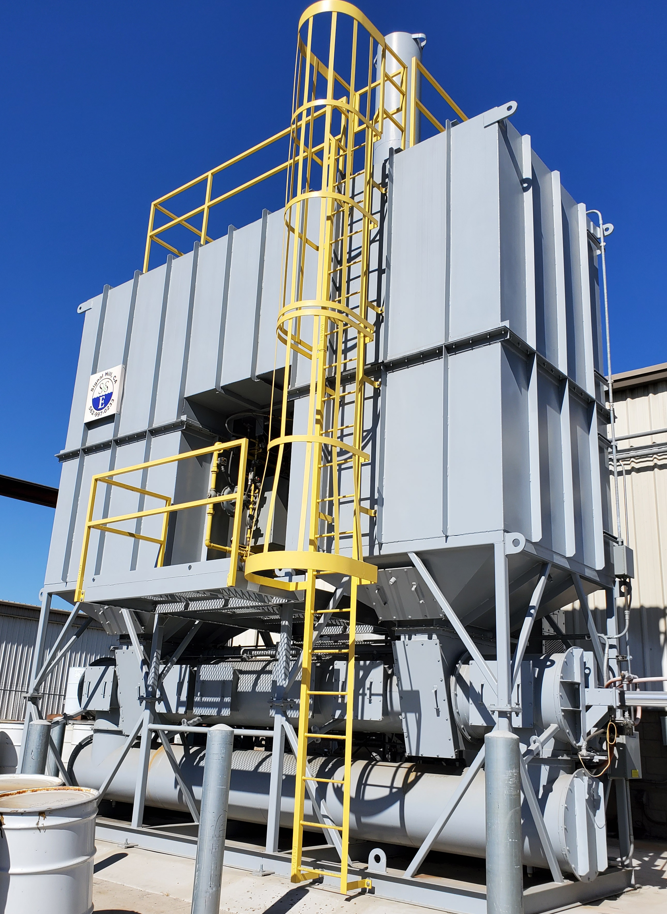
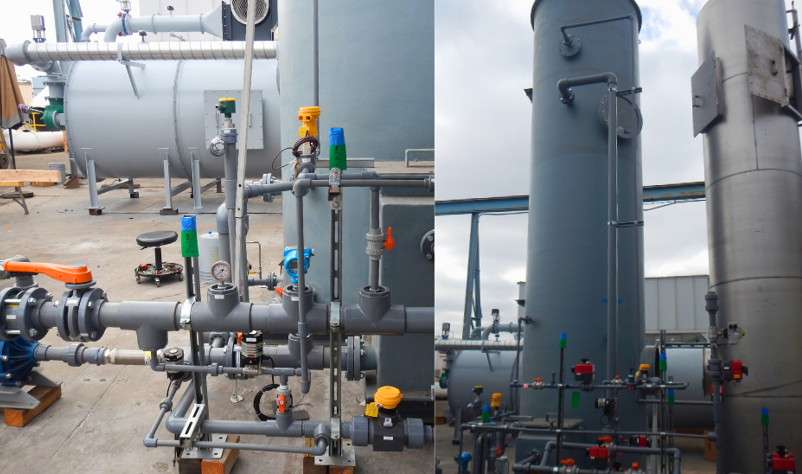
Representative HFO and HCFO Emissions-Control Equipment
These Ship & Shore systems illustrate oxidation and downstream treatment capabilities relevant to fluorochemical manufacturing. The actual HFO or HCFO treatment train, materials, reagents, controls, and performance criteria must be engineered from the facility’s verified chemistry and operating cases.
How Ship & Shore Develops a Fluorochemical Treatment Train
The goal is not to force every source into an RTO. The goal is to define a safe, permit-aligned system that treats each contaminant in the right order.
- 1Map sourcesIdentify normal, batch, maintenance, and upset vents.
- 2Speciate loadingQuantify compounds, VOC loading, flow, concentration, and variability.
- 3Screen hazardsReview LEL, reactivity, toxicity, oxygen, and corrosion.
- 4Select pretreatmentEvaluate condensation, filtration, separation, or dilution.
- 5Engineer oxidationEstablish temperature, residence time, mixing, and heat recovery.
- 6Control acid gasesSize quench and scrubbing for calculated halogen conversion.
- 7Verify performanceCommission, complete performance testing, monitor, train, and maintain.
Why acid-gas calculations matter
Thermal treatment can convert fluorine and chlorine in organic molecules into hydrogen fluoride, hydrogen chloride, and related products. Downstream quenching, absorption chemistry, liquid handling, materials of construction, and stack limits must be engineered from the expected halogen mass rate.
Matching Fluorochemical Stream Conditions to Control Technology
The following matrix describes common engineering implications. It is a screening tool, not a final equipment specification.
| Stream characteristic | Engineering implication | Potential control elements |
|---|---|---|
| Fluorinated or chlorinated organics | Oxidation chemistry and acid-gas formation must be quantified. | RTO or DFTO where suitable, followed by quench and chemical scrubbing. |
| Low flow, higher concentration | High heating value, LEL, and rapid load changes can drive the design. | DFTO, staged combustion, dilution, recovery, or dedicated vent treatment. |
| High flow, dilute organics | Fan power, heat recovery, pressure drop, and compound-specific treatability become central. | RTO, concentrator where compatible, or alternate capture and control. |
| HF, HCl, or other acid gases | Oxidation alone does not neutralize the resulting acid-gas load. | Quench, wet scrubber, reagent controls, corrosion-resistant construction. |
| Condensable material or aerosol | Deposition can foul ductwork, valves, media, and heat-recovery surfaces. | Knockout, condensation, mist elimination, filtration, or wash systems. |
| Batch or campaign variability | Startup, shutdown, peak events, and production changes can exceed average conditions. | Buffering, staged controls, turndown, diversion logic, and recipe management. |
| Oxygen-limited or reactive gas | Combustion air addition and safety strategy require a process-hazard review. | Engineered air addition, inerting interfaces, monitoring, interlocks, and isolation. |
What an RTO or Thermal Oxidizer Can Address
- Applicable oxidizable organic vapors in process exhaust that fit an engineered regenerative thermal oxidizer operating envelope.
- Selected fluorinated-gas production and destruction streams after compound-specific review.
- Mixed solvent and fluorochemical streams within the engineered operating envelope.
- Continuous or batch vents with controls designed for expected variability.
- Heat recovery where regenerative operation is chemically and mechanically compatible.
What Oxidation Alone Does Not Solve
- Hydrogen fluoride, hydrogen chloride, or other acid gases formed or already present.
- Particulate, salts, aerosols, and condensable material that can foul the system.
- Streams outside the approved LEL, oxygen, pressure, temperature, or reactivity envelope.
- Compounds that require a different destruction mechanism or recovery strategy.
- Fugitive emissions without an effective capture and collection design.
What Ship & Shore Evaluates Before Designing the System
A defensible proposal needs source-level data, design cases, and permit criteria. Average airflow and a product name are not enough.
Chemistry
- Complete compound list and mass rates
- Fluorine, chlorine, sulfur, and nitrogen balance
- Potential products of incomplete combustion
- Acid gases and neutralization demand
- SDS and analytical data
Process conditions
- SCFM or ACFM, temperature, and pressure
- Oxygen, moisture, and carrier gases
- Normal, minimum, maximum, and upset cases
- Percent LEL and peak duration
- Condensable and particulate loading
Performance
- Permit limits and required destruction efficiency
- Outlet acid-gas and fluorinated-gas limits
- Monitoring and performance-test methods
- Redundancy and bypass restrictions
- Reporting and recordkeeping needs
Site integration
- Capture hoods, ductwork, and tie-ins
- Fuel, power, water, and reagent availability
- Wastewater and scrubber blowdown handling
- Materials, footprint, and installation access
- Future products and production growth
Custom Fluorochemical Emissions Control From Concept Through Commissioning
Ship & Shore coordinates the capture system, oxidizer, downstream controls, instrumentation, fabrication, installation, commissioning, training, and lifecycle service around one documented operating philosophy.
- Application reviewDefine compounds, design cases, constraints, and regulatory targets.
- Mass and energy balanceModel oxidation duty, heat recovery, acid-gas load, and utilities.
- Process designSelect pretreatment, oxidation, quench, scrubbing, fans, and controls.
- Safety reviewDevelop monitoring, interlocks, isolation, purge, and upset response.
- FabricationBuild and inspect equipment using application-appropriate materials.
- InstallationCoordinate foundations, ductwork, utilities, lifts, and tie-ins.
- CommissioningBalance flows, tune controls, verify sequences, and train operators.
- Lifecycle supportProvide inspections, troubleshooting, parts, controls, and maintenance.
Fluorochemical Destruction and Removal Efficiency Is Application-Specific
A general RTO percentage should not be applied to every HFO, HCFO, HFC, or mixed fluorochemical stream. Project performance criteria must be tied to the actual compounds, treatment train, permit, and approved test method.
- Inlet basis
- Compound-by-compound mass loading at defined flow, temperature, and moisture.
- Oxidation criteria
- Engineered temperature, residence time, mixing, oxygen, and operating margin.
- Acid-gas control
- Quench and scrubber performance based on calculated and tested outlet loading.
- Materials
- Construction selected for hot gas, acid condensation, reagent, and wastewater exposure.
- Monitoring
- Temperature, flow, pressure, LEL, pH, reagent, differential pressure, and permit parameters.
- Verification
- Commissioning and performance testing under representative operating conditions.
HFO, HCFO, and Related Fluorochemical Applications
Ship & Shore can evaluate exhaust from new facilities, expansions, product transitions, debottlenecking projects, and replacement-control projects involving the following operations.
Chemical-Industry Experience Behind the Treatment Train
Ship & Shore provides custom air pollution abatement system design for industrial manufacturing. Its chemical and petrochemical capabilities include regenerative thermal oxidizers, direct-fired thermal oxidizers, quench systems, scrubbers, ductwork, controls, equipment installation, and aftermarket service.
The recommended configuration for an HFO or HCFO project depends on verified process data. Ship & Shore does not assume that a standard RTO can safely or effectively treat every fluorochemical stream.
Related resources include RTO systems for chemical and petrochemical manufacturing, direct-fired thermal oxidizers, chemical scrubbers, and aftermarket service.
Page updated: August 28, 2026. Project-specific performance requires Ship & Shore engineering review.
Frequently Asked Questions About HFO and HCFO Emissions Control
What does HFCO mean?
HFCO is a less-common notation used in some patents, product literature, and regulatory records for certain fluorinated olefins. HFO, meaning hydrofluoroolefin, and HCFO, meaning hydrochlorofluoroolefin, are the more common industry terms. A treatment design should use the exact chemical identity and CAS number rather than rely on the acronym alone.
What is the difference between an HFO and an HCFO?
An HFO contains hydrogen, fluorine, and carbon with an unsaturated carbon-carbon bond. An HCFO also contains chlorine. The difference matters because oxidation products, acid-gas loading, materials of construction, monitoring, and regulatory treatment can vary by compound.
Can an RTO destroy HFO or HCFO emissions?
An RTO may be suitable for specific HFO, HCFO, or mixed-organic exhaust streams, but suitability is compound- and process-specific. Ship & Shore evaluates concentration, flow, oxygen, moisture, temperature, halogen content, byproducts, heat recovery, and the required destruction efficiency before selecting an RTO, DFTO, or another control approach.
Why might a fluorochemical oxidizer need a scrubber?
Oxidizing fluorinated or chlorinated organic compounds can form hydrogen fluoride, hydrogen chloride, and related acid gases. A downstream quench and scrubber may be required to cool the gas, absorb acid gases, and meet outlet limits. Scrubber chemistry and materials must be sized from the expected halogen mass rate.
Does thermal oxidation of fluorochemicals create HF or HCl?
It can. Fluorine and chlorine in the inlet molecules can be converted into hydrogen fluoride or hydrogen chloride during oxidation. The expected products depend on the compounds and operating chemistry, which is why a complete mass balance and downstream treatment review are essential.
Are all HFO and HCFO compounds regulated as VOCs?
No. Regulatory VOC definitions and exemptions vary by compound and jurisdiction. A compound can be excluded from one VOC definition while still presenting greenhouse-gas, toxicity, safety, odor, reporting, or permit considerations. The applicable agency and permit requirements must be confirmed for the facility.
When is a DFTO considered instead of an RTO?
A direct-fired thermal oxidizer may be considered for lower-flow, higher-concentration, high-heating-value, or otherwise specialized streams where regenerative heat recovery is not the best fit. An RTO may be attractive for larger dilute flows when the chemistry is compatible. Ship & Shore compares the full operating envelope rather than selecting technology by industry name.
How are high-concentration fluorochemical vents handled safely?
High-concentration vents require a process-hazard review addressing percent LEL, reactivity, oxygen, pressure, temperature, ignition sources, isolation, purge, dilution, diversion, and upset response. The collection system and controls must prevent the oxidizer from receiving a stream outside its approved operating envelope.
What destruction efficiency can a fluorochemical thermal oxidizer achieve?
There is no responsible universal percentage for every fluorochemical. Performance depends on compound identity, concentration, temperature, residence time, mixing, oxygen, inlet variability, equipment condition, and the complete treatment train. Project criteria should be tied to permit requirements and an approved performance-test method.
What materials are used for corrosive fluorochemical service?
Materials are selected from the actual temperature, acid concentration, condensation risk, reagent chemistry, chloride and fluoride exposure, and mechanical requirements. Stainless alloys, protective coatings, nonmetallic scrubber materials, linings, and corrosion allowances may be evaluated for different sections of the system.
What process data does Ship & Shore need?
Useful inputs include a compound-by-compound mass rate, CAS numbers, SDS information, flow and temperature cases, oxygen and moisture, pressure, percent LEL, condensables, particulate, operating schedule, startup and upset cases, permit limits, utilities, site layout, and future production plans.
How is fluorochemical oxidizer performance monitored?
Monitoring may include combustion or chamber temperature, inlet and outlet concentration, flow, pressure, oxygen, LEL, fan status, scrubber pH, reagent feed, liquid flow, differential pressure, and other permit parameters. The final monitoring plan depends on the selected equipment and applicable regulatory requirements.
Can an existing RTO be reused for a new HFO or HCFO product?
Possibly, but a process change requires a fresh engineering review. Ship & Shore would evaluate the new compound chemistry, halogen loading, oxidation products, media and valve compatibility, corrosion, fan capacity, controls, downstream treatment, permit implications, and remaining equipment condition before recommending reuse or modification.
How does Ship & Shore choose the complete treatment train?
Ship & Shore maps the emission sources, performs mass and energy balances, screens hazards, compares recovery and destruction options, calculates acid-gas loading, evaluates materials and utilities, and aligns the design with permit and lifecycle requirements. The result may combine capture, pretreatment, oxidation, quench, scrubbing, monitoring, and service support.
Technical Sources
- U.S. EPA: Greenhouse Gas Reporting Program – Fluorinated Chemicals
- U.S. EPA: Subpart O HFC-23 Production and Destruction Information
- U.S. EPA: Monitoring by Control Technique – Thermal Oxidizer
- UNEP Ozone Secretariat: HFC and HFO Terminology and Climate Context
- Ship & Shore: Thermal Oxidizer Materials of Construction
Define the Right Control Train for Your Fluorochemical Process
Share the compound list, flow cases, concentrations, operating schedule, permit criteria, and site constraints. Ship & Shore can compare regenerative oxidation, direct-fired oxidation, pretreatment, quench, scrubbing, and other suitable approaches on technical and lifecycle grounds.