
Short answer: Ship & Shore Environmental designs regenerative thermal oxidizer systems for pulp and paper facilities that need to manage VOCs, odor compounds, sulfur-related contaminants, and complex process exhaust. RTO selection is based on flow, temperature, contaminant chemistry, H2S and moisture considerations, particulate loading, corrosion risk, permitting requirements, and opportunities to recover heat.
RTO Solutions for Pulp & Paper Facilities
Custom Emissions Control for Pulp and Paper Operations
Pulp and paper is one of the industries Ship & Shore Environmental identifies as part of its served market. Ship & Shore describes its engineering team as a partner that reviews individual processes and develops environmental and energy solutions around the needs of each facility. The company also identifies pulp and paper among the industries supported by its process review and environmental energy-reduction experience.
For a pulp and paper facility, a regenerative thermal oxidizer (RTO) project should begin with the actual exhaust profile: flow, temperature, VOC and hazardous air pollutant chemistry, odor concerns, operating schedule, collection points, and applicable regulatory requirements.
Information Needed for an RTO Project
A preliminary review helps match the RTO configuration, pretreatment, materials, controls, and heat-recovery approach to the facility. The following information gives the engineering team a useful starting point.
| Project input | Why it matters |
|---|---|
| Process sources and contaminant chemistry | VOC, HAP, odor, sulfur-related compounds, and H2S can require different collection, pretreatment, materials, and control strategies. |
| Exhaust flow and temperature | Normal and peak SCFM, temperature range, and fan conditions influence sizing and system integration. |
| Moisture and particulate loading | Water content and particulate loading influence pretreatment, media selection, pressure drop, maintenance, and corrosion planning. |
| Schedule and future production | Production cycles, operating hours, planned expansion, and changing process conditions help avoid an undersized or inflexible design. |
| Existing abatement and heat recovery | Existing scrubbers, oxidizers, heat exchangers, burners, utilities, and process heat demand shape the integration plan. |
| Permitting and site constraints | Permit limits, reporting needs, available space, access, utilities, and maintenance requirements shape the final project scope. |
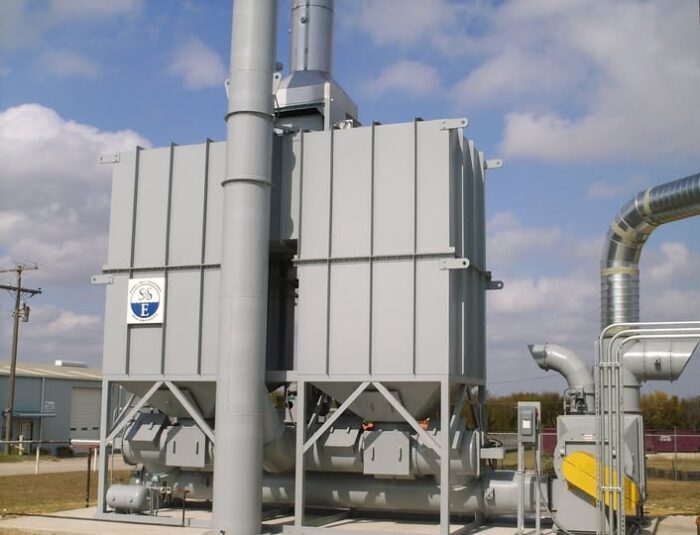
How an RTO Supports Pulp and Paper Emissions Control
An RTO uses high-temperature oxidation to destroy collected VOCs and regenerative ceramic media to capture and reuse heat. Ship & Shore has described clean-tech RTOs, scrubbers, low-NOx burners, and heat recovery strategies as solutions relevant to pulp and paper and related manufacturing operations.
Because pulp and paper streams can vary by process and chemistry, the system should be selected after engineering review rather than from a standard equipment package. Ship & Shore designs custom abatement systems to fit the process, facility layout, emissions profile, and compliance objectives.
Industry-Specific Design Considerations
- VOC, HAP, odor, and other contaminant chemistry in the process exhaust
- Potential sulfur-containing streams that may require pretreatment or material upgrades
- Variable flow rates, production schedules, collection points, and plant layouts
- Integration with scrubbers, heat exchangers, low-NOx burners, or other abatement equipment
- Heat recovery opportunities, permitting requirements, and long-term service needs
Managing Complex or Sulfur-Containing Exhaust Streams
Ship & Shore’s technical guidance notes that hydrogen sulfide (H2S) can occur in VOC streams associated with pulp and paper and can create corrosion, acid-gas, odor-control, and ceramic-media risks if it is not considered during design. The same guidance describes possible strategies such as scrubber pretreatment, corrosion-resistant upgrades, sulfur traps or catalyst beds, and media-selection adjustments.
Not every pulp and paper facility has H2S in its exhaust. The point is to characterize the stream before equipment selection so the RTO, upstream treatment, materials, controls, and maintenance plan match the actual chemistry.
Energy Recovery and Operating Efficiency
RTO ceramic media captures heat from the treated exhaust and returns it to the incoming process air. Ship & Shore also describes waste-heat recovery systems that can redirect hot exhaust to other plant operations, including preheating incoming VOC-laden air or producing steam, hot water, or hot oil through additional equipment when appropriate.
These opportunities can help reduce wasted energy and operating costs, but the best configuration depends on the facility’s heat demand, exhaust temperature, production schedule, and process integration requirements.
Permitting, Integration, and Long-Term Support
Ship & Shore supports industrial projects with process review, custom system design, fabrication, installation, commissioning, compliance planning, and aftermarket service. The team can evaluate whether an RTO, scrubber, heat exchanger, low-NOx burner, or combination system best fits the facility.
For additional context, review Ship & Shore’s technical guidance on H2S in VOC streams and the company’s process and energy-reduction experience.
Frequently Asked Questions About Pulp and Paper RTOs
Why does pulp and paper RTO design require process review?
Pulp and paper facilities can have different exhaust sources, operating schedules, contaminant chemistry, and heat-recovery needs. Ship & Shore evaluates those details so the emissions control system matches the facility rather than relying on a one-size-fits-all design.
Can H2S affect a pulp and paper RTO?
It can. Ship & Shore’s technical guidance says H2S may contribute to acid gas formation, corrosion, odor-control problems, and damage to ceramic media. If H2S is present, upstream treatment, materials, media, and controls should be evaluated as part of the project.
Can an RTO be combined with a scrubber or heat exchanger?
Yes. Ship & Shore identifies scrubbers, heat exchangers, and other abatement equipment as potential parts of an integrated emissions control and energy-recovery system. The right combination depends on the process analysis and project goals.
What information should a pulp and paper facility provide?
Start with exhaust flow, temperature, VOC and HAP composition, H2S or other contaminant information, operating schedule, collection points, existing equipment, utilities, and permit requirements. Those inputs support a more accurate engineering evaluation.
Related Ship & Shore Resources
Regenerative Thermal Oxidizers | Heat Exchangers | Odor Control Abatement Services | Industries Served
Request a project review
Every facility has a different exhaust profile, operating schedule, layout, and permitting context. Ship & Shore Environmental reviews the process data, evaluates the emissions control requirements, and develops a custom solution for the application. Request a quote to begin a conversation with the Ship & Shore engineering team.