
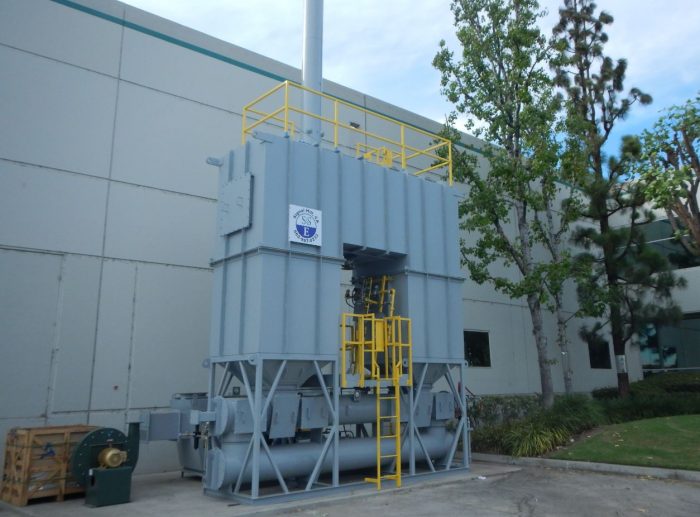
RTO Systems for Commercial Bakeries
Ship & Shore Environmental designs custom regenerative thermal oxidizer systems for applicable VOC and ethanol emissions from commercial bakery exhaust. We evaluate oven airflow, production schedules, exhaust chemistry and heat-recovery opportunities to develop a system that fits your operation.
- Oven exhaust integration
- Ethanol and VOC control
- Regenerative heat recovery
- Service and maintenance
How Does a Commercial Bakery RTO Work?
A commercial bakery RTO treats collected organic vapors by heating the exhaust under controlled oxidation conditions. Ceramic heat-exchange media transfers energy from the treated gas to the incoming stream, reducing the auxiliary energy needed to maintain treatment temperature.
For bread, bun and roll production, fermentation can generate ethanol that is released during baking. Other bakery processes may introduce additional organic vapors, odors or aerosols. The regenerative thermal oxidizer must be selected for the actual exhaust composition, not simply the product name.
Start With the Exhaust
- Measure normal, minimum and peak operating conditions.
- Separate VOC treatment from particulate, grease and moisture management.
- Evaluate capture efficiency as well as oxidizer performance.
- Compare capital cost, energy use and maintenance over the operating life.
Bakery Processes and Emissions-Control Priorities
Different lines can produce very different exhaust conditions. A facility review should identify each source before combining flows into a common treatment system.
| Process | Potential concern | Engineering priority |
|---|---|---|
| Bread, buns and rolls | Fermentation-related ethanol released during baking. | Recipe changes, production rate, oven exhaust flow and capture. |
| Cookies, cakes and specialty products | Recipe-dependent VOCs, aromas and possible oil aerosols. | Characterize ingredients and exhaust instead of applying bread-baking assumptions. |
| Multiple ovens and production lines | Variable flow and overlapping production peaks. | Balance ductwork and maintain each oven’s required pressure. |
| Cleaning and product changeovers | Intermittent vapor loads and altered ventilation. | Include cleaning materials, schedules and transition conditions in the design basis. |
| Adjacent frying or coating operations | Grease, droplets, particulate or mixed exhaust. | Review stream compatibility and upstream removal requirements. |
Oven Integration, Pretreatment and Heat Recovery
Protect Oven Operation
Collection fans, duct pressure, dampers and production interlocks must work with the oven’s ventilation requirements. Collection-system design should avoid disrupting baking conditions while capturing the intended emissions.
Condition the Exhaust
An RTO is not a substitute for dust or grease separation. Moisture, condensable material and aerosols need review to protect valves, fans and ceramic media. Filtration or other pretreatment is selected when the stream requires it.
Evaluate Energy Use
Operating hours, VOC loading and airflow influence energy demand. Additional heat recovery can be evaluated against the site’s actual heat demand; savings are project-specific.
For lower-temperature oxidation alternatives, compare catalytic oxidizers with regenerative systems. Electric or hybrid gas/electric RTO configurations also require a utility-capacity and lifecycle assessment. No single configuration is the best choice for every bakery.
Ship & Shore Food-Processing Experience
Ship & Shore’s food-industry technical guidance discusses ethanol emissions from baked products and the use of thermal and catalytic oxidation. Our broader food-manufacturing experience includes RTO systems combined with pretreatment for challenging exhaust mixtures.
These examples support process-specific engineering; they do not establish a universal design or performance guarantee for a bakery.
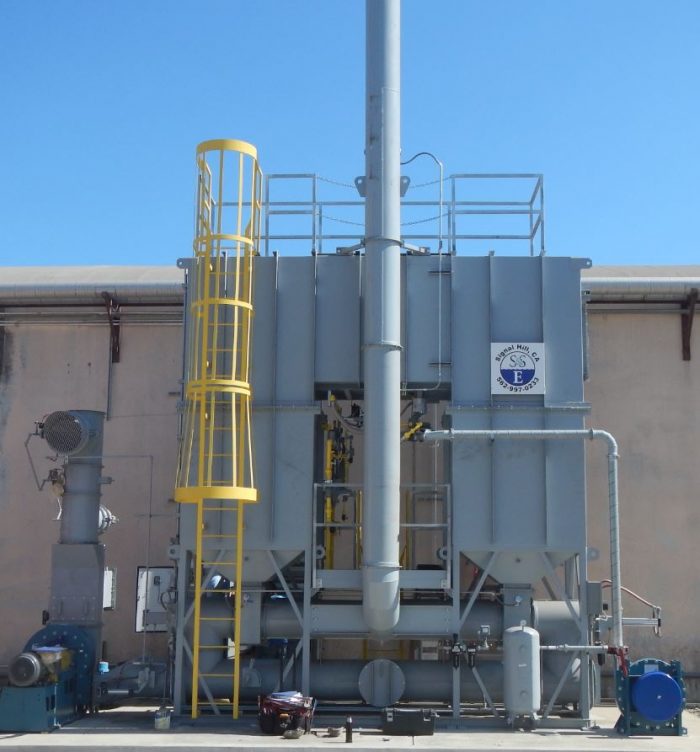
What We Need to Evaluate Your Bakery Project
A useful proposal begins with a clear operating envelope. Send the information you have; SSE can help identify the remaining questions during system-design evaluation.
Process and Emissions
- Oven types, recipes, hourly production and operating shifts.
- Normal and peak airflow in SCFM or ACFM, exhaust temperature and moisture.
- VOC composition, concentration and mass loading, with available test data.
- Oil aerosols, particulate, condensables and cleaning chemicals.
Facility and Project
- Existing capture, ductwork, fan performance and available space.
- Permit conditions and required monitoring or testing.
- Fuel and electrical availability, production expansion and outage windows.
- Maintenance access, operator needs and desired commissioning schedule.
Source capture directly affects overall control: see capture efficiency. Applicable requirements and test methods must be confirmed for the facility with its permitting authority. EPA’s bread-baking emissions references provide technical background, not a substitute for a site-specific permit determination.
Support Beyond Equipment Selection
New oven lines, replacement oxidizers and plant expansions each require a different integration plan. SSE’s equipment-installation services and aftermarket support help connect system design with commissioning, inspection, troubleshooting and ongoing maintenance.
For a plant that also handles other food processes, use the Food Manufacturing page to review the broader application range. This bakery page focuses specifically on oven exhaust and baked-product emissions.
Commercial Bakery RTO FAQs
Do all commercial bakeries need an RTO?
No. The appropriate control strategy depends on actual emissions, production volume, process conditions and the applicable permit. Some bakeries may use another technology or may not require an oxidizer. A source-specific review should establish the need before equipment is selected.
Why does bread baking produce ethanol emissions?
Yeast fermentation produces ethanol in the dough. Much of that ethanol is released as the dough heats in the oven. Recipe, yeast usage, fermentation time and production rate affect the emission profile.
Can one RTO serve multiple bakery ovens?
Potentially. The design must account for simultaneous and minimum flows, oven pressure requirements, incompatible exhaust streams, production peaks and safe startup and shutdown. Collection ductwork and controls are as important as the oxidizer itself.
Is an RTO better than a catalytic oxidizer for bakery exhaust?
Neither is best for every bakery. An RTO uses ceramic heat recovery without a catalyst. A catalytic oxidizer can operate at a lower oxidation temperature, but catalyst compatibility and maintenance matter. Airflow, contaminants, operating hours and lifecycle cost determine the better fit.
Can bakery RTO heat be recovered for another process?
Regenerative media already recovers heat inside the RTO. Additional heat recovery may be feasible when sufficient usable energy and a compatible heat demand exist. The design must preserve oven operation, product quality, safety and emissions performance.
What information is needed for a bakery RTO proposal?
Share oven and production details, exhaust flow and temperature, available emissions data, recipes and operating schedules, permit conditions, utilities and site layout. Include cleaning cycles, expansion plans and required installation windows.
Discuss Your Emissions-Control Project
Share your process, available exhaust data and project goals with Ship & Shore Environmental. We can help evaluate the next steps for a new system, expansion or replacement.
Explore all industries served or RTO terminology and design concepts.