
#TechTalk: Is Your VOC Control System Designed Around Your Process?
October 7, 2026 8:33 am#TechTalk: Is Your VOC Control System Designed Around Your Process?
Great packaging is designed to grab attention. Vibrant colors, high-gloss finishes, laminations, coatings, and specialty effects help products stand out on crowded shelves. Behind that finished package, however, is a manufacturing process that can generate volatile organic compound (VOC) and, depending on the materials used, hazardous air pollutant (HAP) emissions.
For flexographic and rotogravure printers, controlling these emissions is about much more than simply installing an oxidizer.
Where Do Printing VOCs Come From?
Emissions can originate from multiple points throughout the operation, including:
- Press and dryer exhaust
- Coating and laminating processes
- Ink and solvent mixing
- Cleaning operations
- Solvent storage and handling
- Fugitive emissions around presses
There is another source worth considering: ozone generated by corona treatment systems. Depending on the facility and applicable permit requirements, ozone may require dedicated treatment or integration into an existing abatement system.
The Engineering Starts Before the RTO
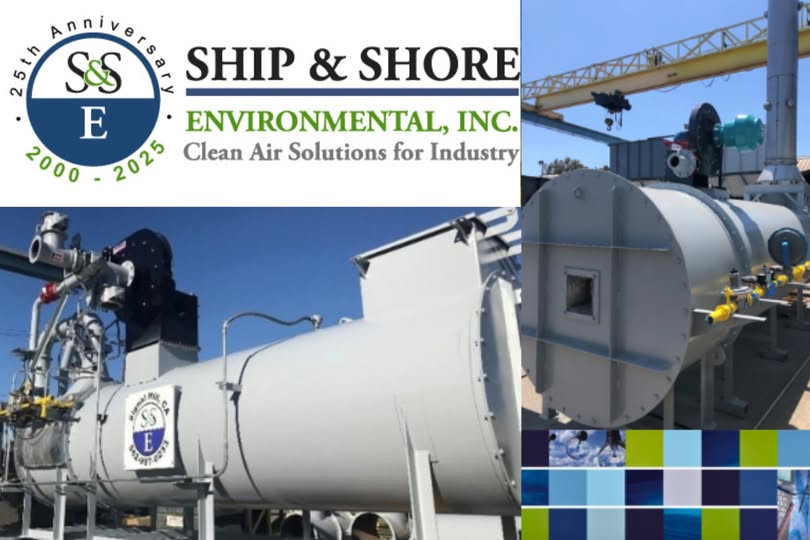
A properly designed Regenerative Thermal Oxidizer (RTO) can provide highly effective VOC destruction while recovering heat from the treated exhaust. But the performance of the overall system depends heavily on what happens upstream.
Capture efficiency and airflow management are critical. Sending unnecessary CFM to an oxidizer can mean a larger system, higher fan power, greater energy demand, and increased operating cost. That is why an effective approach starts with understanding the printing process, identifying emission sources, optimizing collection points and ductwork, and minimizing unnecessary airflow.
Designing Beyond Compliance
A strong emissions-control strategy should also consider:
- VOC concentration and composition
- Press configuration and production rates
- Existing and future press expansion
- Air permitting requirements
- Heat-recovery opportunities
- Energy consumption and operating cost
- Controls and system flexibility
The goal is not simply to destroy VOCs. The goal is to capture emissions efficiently, optimize the abatement system, recover energy where practical, and create a solution that can grow with the facility.
At Ship & Shore Environmental, we combine process knowledge with custom engineering to develop VOC collection and abatement systems for the printing and packaging industry, from capture systems and ductwork to RTOs, permitting, heat recovery, installation, commissioning, and aftermarket service.
Smarter capture. Better control. Lower operating costs. Built for what comes next.
Talk with our team about your printing or packaging emissions-control requirements.
For further assistance, please call us at +1 (562) 997-0233 or email service@shipandshore.com.
#FlexographicPrinting #Packaging #VOC #AirPollutionControl #RTO
Categorised in: Air pollution, Industry news, News, News, RTO, Ship & Shore, TechTalk, VOC Abatement