#TechTalk: The Journey from BEAD TO BLOCK
August 26, 2026 8:48 am#TechTalk: The Journey from BEAD TO BLOCK
August 26th, 2026
Expanded Polystyrene (EPS) is widely used for insulation, packaging, construction, and impact protection. Its manufacturing also creates a specific air-quality challenge: controlling VOC emissions, primarily pentane, released during processing.
Pentane emissions can occur throughout EPS production not just during expansion.
Potential sources include bead storage and transfer, pre-expanders, fluidized-bed dryers, block and shape molding, pre-expanded bead silos, and aging or conditioning areas. Heating vaporizes the blowing agent, while drying, storage, and aging can release additional pentane.
Each source can have different airflow, VOC concentration, temperature, and operating cycles.
Capture Is the First Engineering Challenge
Effective abatement begins with source capture and properly engineered collection. EPS exhaust may involve high airflow, variable VOC concentrations, steam-related moisture, and flammable VOC conditions.
Engineered ductwork, airflow balancing, appropriate filtration, and safe concentration management help deliver a controlled exhaust stream to the treatment system while avoiding unnecessary airflow.
Efficient capture can reduce treatment volume, equipment requirements, and energy demand.
Why RTOs Are Proven for EPS
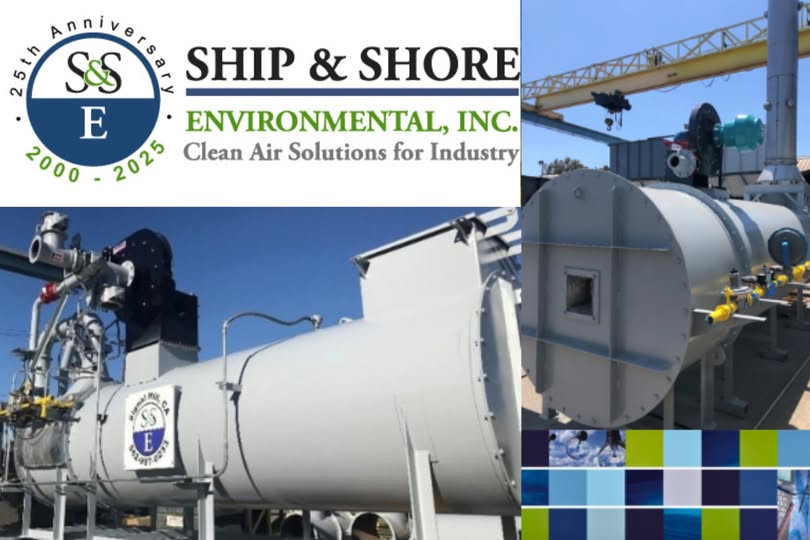
For many EPS applications, Regenerative Thermal Oxidizers (RTOs) provide reliable thermal destruction of pentane and other VOCs. Ceramic heat-recovery media transfers energy from treated exhaust back into the incoming stream, reducing supplemental fuel requirements.
Properly designed RTO systems can achieve greater than 98% VOC destruction efficiency at operating temperatures around 1,500°F.
Actual performance and fuel consumption depend on VOC loading, airflow, temperature, heat recovery, and operating conditions. Because EPS exhaust can contain moisture and bead carryover, inlet protection, drainage, and appropriate equipment design are important for reliable operation.
RTO design must address the complete exhaust stream not VOC concentration alone.
Engineering Beyond Compliance
A successful EPS abatement system should accommodate current production while allowing for future expansion or process changes. Safety, capture efficiency, airflow variability, energy recovery, permitting, maintenance, and lifecycle cost should all be considered during system design.
Ship & Shore Environmental provides engineered VOC abatement solutions, including collection-system design, thermal oxidation, permitting support, equipment integration, and aftermarket service.
Smarter EPS emissions engineering means effective capture, safe operation, efficient VOC destruction, and dependable long term performance.
📞 Contact us at +1 (562) 997-0233
📧 Email: service@shipandshore.com
Categorised in: #CleanAirSolutions, #MadeInAmerica, #VOC Control, Ship & Shore, Technical, TechTalk, ThermalOxidizer, VOC Abatement