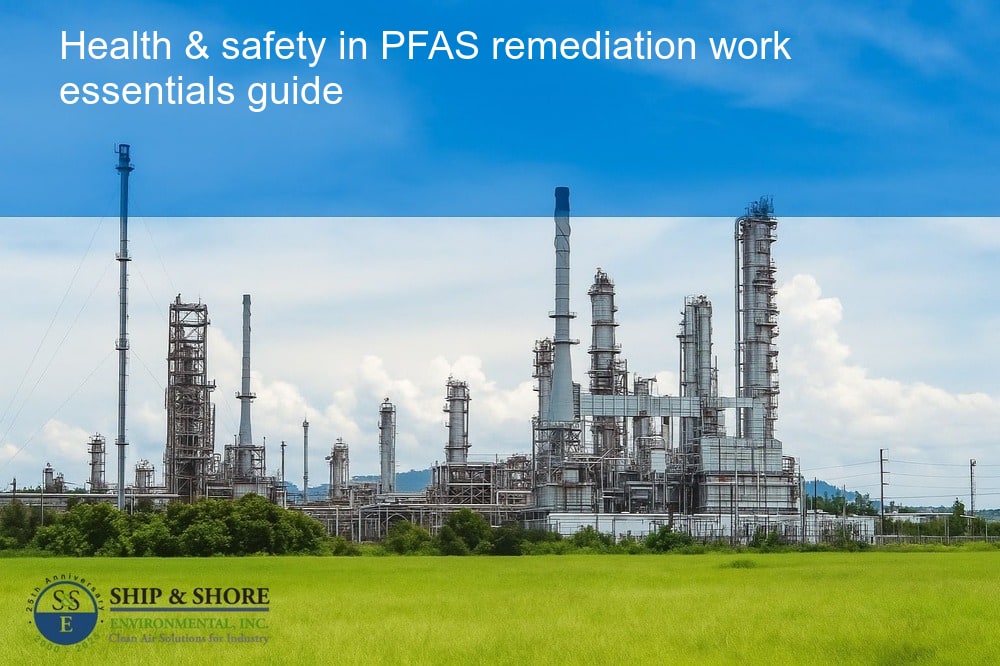
Health & safety in PFAS remediation work essentials guide
September 7, 2026 7:08 amThe Critical Importance of Health & Safety in PFAS Remediation Work
At Ship & Shore Environmental, we have made it our mission to lead in the field of Health & safety in PFAS remediation work. In recent years, growing awareness of PFAS (Per- and Polyfluoroalkyl Substances) contamination has heightened the need for effective cleanup—and above all, safe remediation practices. PFAS compounds, with their persistent nature and widespread presence in air, soil, and water, pose serious risks to both the environment and human health. As environmental professionals, we understand that every step in a remediation project requires strict attention to health and safety to protect our teams, our clients, and the communities we serve. This article explores why safety is paramount, the regulations guiding our operations, the hazards we manage, and what we do to ensure our work is both efficient and secure.
Assessing the Risks of PFAS Remediation
PFAS remediation is a complex process with unique challenges. Unlike many conventional contaminants, PFAS compounds are resistant to most forms of natural degradation, meaning they can persist for decades in the environment. Because of their chemical stability, specialized remediation methods are needed. This raises the stakes for ensuring safety, as workers may encounter unknown PFAS concentrations, by-products, and other hazardous materials.
The risks in PFAS cleanup operations stem from several factors:
- Potential for chemical exposure during sampling, containment, and treatment
- Generation of toxic dusts or vapors during remediation
- Physical hazards in handling and transporting contaminated materials
- Unpredictable site conditions, especially at older or heavily affected areas
A thorough risk assessment is always our first step. We evaluate each site’s layout, contamination pathways, and likely exposure points to create safe, effective remediation strategies. By implementing cutting-edge technologies such as Ship & Shore’s PFAS remediation and removal systems, along with robust containment and monitoring methods, we strive to minimize every potential hazard.
Navigating Regulations and Health Hazards in PFAS Remediation Work
Regulatory compliance is at the heart of safe PFAS remediation. As health concerns linked to PFAS have become more apparent, federal and state agencies have established clear guidelines for how contaminated sites must be handled. The Environmental Protection Agency (EPA) provides detailed frameworks for PFAS remediation and site safety. For example, their Interim Guidance on Destruction and Disposal of PFAS and Materials Containing PFAS outlines requirements designed to prevent exposure and improper disposal.
The main health hazards in PFAS cleanup arise from skin contact, inhalation of airborne particles, and accidental ingestion. PFAS chemicals have been linked to several health issues, including immune system suppression, developmental effects in children, hormone disruption, and increased cancer risks. During remediation, workers might handle contaminated soils, wastewater, or equipment, putting them at risk unless strict controls are in place.
Compliance with Occupational Safety and Health Administration (OSHA) standards is essential. Our protocols mandate the use of PPE (Personal Protective Equipment), air monitoring, and engineering controls to keep contaminant levels below established thresholds. We also stay up-to-date with evolving PFAS research and state regulations to ensure we never fall behind industry best practices.
Best Practices for Meeting Regulations
We focus on several key areas to ensure full regulatory compliance and reduce health hazards:
- Identifying and quantifying all PFAS contaminants present
- Using water treatment technologies, such as advanced water treatment for PFAS to separate and destroy pollutants safely
- Employing engineered solutions, like high-efficiency scrubbers and dust collectors, to control emissions
- Strict documentation of remediation activities
- Continuous environmental and occupational health monitoring
Personal Protection, Training, and Safe Work Practices in PFAS Remediation
The cornerstone of health & safety in PFAS remediation work is our unwavering commitment to worker protection. This commitment is visible in every aspect of our safety program, from the PPE we require to the comprehensive training our crews receive. PFAS remediation tasks often involve direct contact with hazardous media, so our approach is proactive and prevention-focused.
Personal Protective Equipment and Controls
Selecting the appropriate PPE is not a one-size-fits-all task. Depending on the project, our teams may use gloves, respirators, disposable or chemical-resistant coveralls, eye protection, and protective footwear. Where risk of inhalation or dust generation exists, we routinely deploy negative-pressure enclosures and air purification units to keep contaminant levels in check.
We also implement strict decontamination protocols. Workers are trained to remove PPE in designated areas, minimizing the risk of tracking contaminants outside controlled zones. Our investment in technology—such as automated decon showers and real-time exposure monitoring—reflects our determination to maintain industry-leading standards of safety.
Training and Continuous Education
Staying current with the latest developments in PFAS remediation is vital. We require all staff to participate in health and safety training before setting foot on site. This includes instruction on hazard recognition, PPE usage, emergency procedures, and proper decontamination. We also conduct regular drills to reinforce these skills and ensure that our response to incidents is immediate and effective.
In addition to mandatory OSHA training, we provide our teams with specific education around unique PFAS hazards and new remediation methods. From innovative treatment solutions (like advanced remediation technologies) to emerging research on PFAS toxicology, we ensure that knowledge translates into safer, smarter work practices.
Ensuring Compliance and Driving Continuous Improvement
Achieving true excellence in health & safety in PFAS remediation work requires more than simply meeting today’s regulations. It also calls for a culture of continuous improvement and a strong compliance framework. At Ship & Shore Environmental, we regularly audit our projects, document lessons learned, and integrate new technologies and procedures.
We track several key metrics to assess the effectiveness of our programs:
- Worker exposure levels throughout project phases
- Incidence of near-misses or safety violations
- Performance and maintenance of control technologies
- Client and regulator feedback on safety conduct
Regular internal reviews, combined with third-party safety audits, help us identify areas for improvement. As we incorporate feedback and research findings into our daily operations, we reduce risks, streamline workflows, and strengthen our reputation as an industry leader in safe PFAS remediation. Contact us anytime for a review of your site safety program or to discuss how we can help you comply with evolving environmental, health, and safety standards.
The Future of Health & Safety in PFAS Remediation Work
As regulations grow stricter and public demand for safe, effective PFAS cleanup rises, we see a clear path forward. The future of health & safety in PFAS remediation work will depend on innovation, education, and collaboration between stakeholders. We are excited about new technologies, such as high-efficiency destruction processes, portable treatment systems, and AI-driven monitoring platforms, which promise to make PFAS cleanup both safer and more efficient.
At Ship & Shore Environmental, we continue to invest in research and development, improve our internal standards, and work with regulators to shape the future landscape of PFAS remediation. We encourage clients and industry partners to stay informed, participate in safety training, and prioritize health & safety in every phase of PFAS remediation work.
If your organization faces PFAS contamination challenges, or if you simply wish to bolster your own PFAS worker safety programs, contact us for a consultation. We offer comprehensive solutions—from site risk assessments and water treatment options to advanced scrubbers and dust collectors—designed to protect your team and ensure regulatory compliance. The stakes in PFAS remediation are high, but with a strong focus on health & safety, our work can set the benchmark for a cleaner, safer future.
FAQ
What are the biggest risks in PFAS remediation projects?
PFAS remediation comes with several risks, including chemical exposure and site contamination. We must also consider the impact on air, water, and nearby communities. By identifying hazards early, we minimize potential harm to both our team and the environment, ensuring that our cleanup efforts are both safe and effective.
Why is health & safety in PFAS remediation work so important?
Prioritizing health & safety in PFAS remediation work not only protects our employees from toxic exposure but also maintains community trust. For example, proper safety protocols help prevent accidents and long-term illnesses. Our dedicated focus helps raise industry standards and safeguard public health.
Which regulations apply to site safety during PFAS cleanup?
Strict regulations guide every aspect of our PFAS remediation. In addition to EPA guidelines, we follow OSHA rules and local safety standards. These frameworks ensure we operate within the law and continuously improve our safety measures.
What protective equipment should workers use during PFAS remediation?
Personal protective equipment (PPE) is essential in PFAS cleanup. Depending on the task, our team may use respirators, gloves, chemical suits, and eye protection. Furthermore, we regularly inspect and upgrade our gear to meet evolving safety needs.
How do we train staff to maintain safety during PFAS site remediation?
We provide comprehensive and ongoing safety training to all workers involved in PFAS remediation. Training covers hazard recognition, emergency procedures, and best practices to minimize risk. Ongoing education ensures our team stays up-to-date as regulations and techniques evolve.
Categorised in: Blog