RTO lifecycle planning / Repair / Retrofit / Replacement
RTO Repair vs. Replacement
Repair an RTO when a defined fault can be corrected and the system still fits the process. Retrofit when sound equipment needs better controls, heat recovery, or maintainability. Evaluate replacement when condition, capacity, reliability, or lifecycle cost makes continued investment difficult to justify.
The right decision starts with inspection and operating data, not equipment age alone. Ship & Shore Environmental supports thermal oxidizer inspection, service, upgrades, and new-system engineering, including aftermarket support for other manufacturers’ equipment.
Urgent equipment issue? Visit Contact Us for 24/7 service contacts. A planning guide is not an operating or safety procedure; follow your facility’s approved procedures and contact qualified service personnel.
RTO repair vs. retrofit vs. replacement
| Option | When to evaluate it | What to establish first |
|---|---|---|
| Repair | An isolated valve, actuator, instrument, insulation, burner, or media problem is affecting an otherwise suitable system. | Root cause, repair scope, condition of surrounding equipment, available parts, and whether the correction restores required operation. |
| Retrofit or upgrade | The core equipment remains serviceable, but controls, heat recovery, components, or process integration need improvement. | Technical compatibility, expected benefit, remaining equipment life, installation outage, and permit implications. |
| Replace | Widespread deterioration, recurring failures, limited parts support, a major process change, or insufficient capacity makes continued investment less practical. | Current and future exhaust requirements, complete installed cost, operating cost, production-transition plan, and permitting path. |
These are evaluation criteria, not automatic replacement rules. More than one option may be viable after inspection.
Start with the condition of the whole system
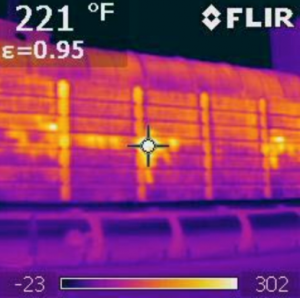
A system can keep running while performance declines. SSE’s AM Mondays article When Machines Whisper, Maintenance Should Listen discusses gradual changes in sensors, dampers, airflow, and combustion that deserve investigation.
Arrange a preventive-maintenance inspection and review structural condition, insulation, ceramic media, valves, burner and safety systems, fan performance, instruments, and controls. Inspect the collection system too: an oxidizer cannot correct every upstream capture problem.
- Shell and insulation: document damage, corrosion, hot spots, and the extent of any required repair.
- Ceramic media: assess plugging, deterioration, pressure drop, and heat-recovery performance.
- Valves and actuators: examine operation, sealing, repeat failures, and serviceability.
- Burner, instruments, and controls: review operation, calibration, alarms, interlocks, and parts support with qualified personnel.
- Airflow and collection: compare current production, duct condition, fan loading, and process exhaust with the original design basis.
When repair or retrofit deserves a closer look
A defined problem does not automatically justify replacing the entire RTO. Ceramic media replacement and upgrades, insulation repair, valve work, burner service, or controls improvements may address the limitation when the remaining system is suitable.
SSE’s upgrades and retrofits services provide a path to evaluate improvements to existing equipment. Determine why the issue developed before selecting a remedy; replacing a component without correcting an incompatible process condition can leave the underlying problem in place.
The AM Mondays article Small Heat Losses Today. Bigger Energy Bills Tomorrow explains how leakage, fouling, and deterioration can affect energy use. Technical Corner’s high-cycle valve resource adds context for a component that directly affects RTO operation.
When replacement should be on the table
Evaluate a new regenerative thermal oxidizer when the existing unit no longer matches the plant’s needs or when the full repair-and-upgrade scope approaches a less attractive lifecycle investment.
- Production expansion changes airflow or VOC loading beyond the system’s suitable operating range.
- Process chemistry changes create material, contamination, or treatment-technology concerns.
- Extensive deterioration or recurring failures undermine reliability despite corrective work.
- Obsolete components or controls make ongoing maintenance difficult.
- The plant needs a different footprint, integration approach, or long-term operating strategy.
Replacement planning should include collection ductwork, foundations, utilities, controls integration, access, commissioning, and production continuity. Review proposed changes with the environmental team and permitting authority; do not assume an existing permit automatically covers a modified or new system.
Compare lifecycle cost, not just the equipment quote
Use the same production assumptions and analysis period for all viable options. Include the following in a documented comparison:
- Installed scope: engineering, equipment or repairs, freight, rigging, foundations, ductwork, utilities, controls, and commissioning.
- Downtime and transition: shutdown duration, production impact, scheduling constraints, and any temporary arrangements that are technically and legally permissible.
- Operating expense: natural gas, fan electricity, operating hours, maintenance, parts, and expected service intervals.
- Remaining useful life and risk: condition of retained equipment, reliability history, parts availability, and future expansion requirements.
- Verified financial support: include only confirmed rebates or incentives in the base case, with assumptions clearly identified.
Build the baseline before promising savings
Compare utility use at similar airflow, production, VOC loading, and operating schedules. Higher fuel consumption alone does not prove that replacement is the best choice. Request an engineering estimate with assumptions and validate the outcome after implementation.
Project examples that inform the decision
These SSE projects illustrate growth and energy considerations. They are not controlled repair-versus-replacement comparisons and do not predict another facility’s results.
RTO repair and replacement questions
How old does an RTO have to be before replacement is necessary?
There is no universal replacement age. Base the decision on documented condition, maintainability, emissions performance, process fit, expected remaining service life, and lifecycle cost. An inspection can identify whether repair or retrofit is still practical.
Can ceramic media replacement avoid a complete RTO replacement?
It may, when media condition is the principal limitation and the rest of the system remains suitable. Review the cause of plugging or damage, pressure drop, heat recovery, airflow requirements, and the condition of the shell, valves, burner, and controls before deciding.
Does higher natural-gas use mean the RTO needs to be replaced?
Not necessarily. Compare fuel use under similar production conditions and review airflow, VOC loading, temperature measurements, heat recovery, leakage, and burner performance. The cause may be a maintenance issue, a process change, or a design limitation.
Does Ship & Shore service oxidizers made by other manufacturers?
Yes. SSE describes aftermarket inspection, repair, and maintenance services for all brands of thermal oxidizers. Provide the manufacturer, model, serial number, available drawings, and service history when requesting a review.
Can an RTO repair or retrofit affect permitting requirements?
Yes, depending on the scope and the applicable permit. Changes to capacity, emissions, fuel, controls, or operating conditions should be reviewed with the facility environmental team and the relevant air district or permitting authority before implementation.
What information should I send for a repair-versus-replacement review?
Start with the equipment nameplate, capacity, process description, recent alarms and maintenance history, fuel and electricity records, available test reports, planned production changes, and your shutdown window. Share what you have; SSE can discuss what additional information is needed.
Get a process-specific recommendation
Send your equipment manufacturer and model, operating capacity, main concern, recent service history, and planned production changes. Include your shutdown window and available drawings or test reports. SSE can discuss the next inspection or engineering step and compare a repair, retrofit, or new-system scope.
service@shipandshore.com | Contact and 24/7 service information
Prepared from SSE’s published aftermarket, AM Mondays, and Technical Corner resources. Final scope, performance, permitting, pricing, and availability require project-specific review.