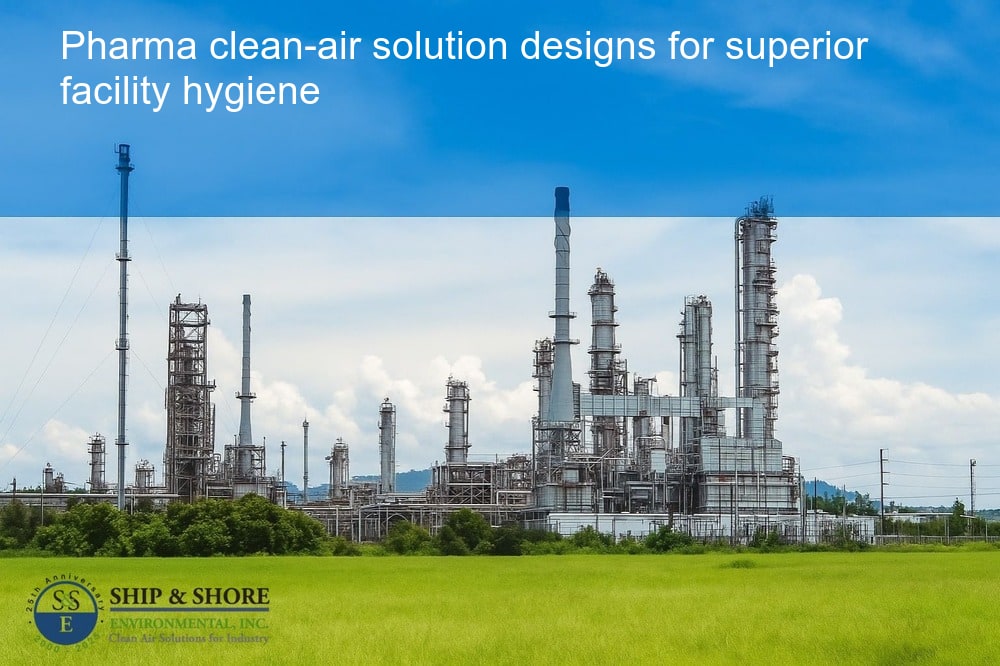
Pharma clean-air solution designs for superior facility hygiene
October 7, 2026 4:25 amUnderstanding Pharma Clean-Air Solution Designs: Safeguarding Health and Compliance
Creating advanced pharma clean-air solution designs has never been more important. At Ship & Shore Environmental, we know that air purity in pharmaceutical manufacturing environments is the foundation for patient safety, regulatory compliance, and innovation. By focusing on tailored clean-air solutions, we help our partners eliminate contaminants that can compromise product integrity and human health. With expanding regulatory pressure and the rapid evolution of pharmaceutical manufacturing processes in 2026, a strategic approach to cleanroom air quality is critical for industry leaders.
Why Air Purity Matters in Pharmaceutical Facilities
Air quality is not only about cleanliness – it defines product quality, manufacturing consistency, and regulatory approval pathways. Airborne contaminants such as particles, microbials, and volatile organic compounds (VOCs) pose major threats to pharmaceuticals, from APIs to biologics. Even trace contaminants can alter drug efficacy or trigger recalls, making a robust clean-air filtration system essential. In addition, regulatory bodies such as the FDA and EPA maintain strict standards for air pollution abatement, requiring proactive design strategies for pharma clean-air solution designs to ensure compliance.
Our experience underscores a basic truth: ensuring pure, contaminant-free air translates directly to patient safety and business continuity. Failure to optimize air processes can result in cross-contamination, compromised batches, and non-compliance penalties. As these stakes grow, a comprehensive understanding of air filtration technology and regulation is vital. We support our partners by building redundancy and smart controls into every clean-air solution, safeguarding not only their operations but the lives that depend on their products.
Key Challenges in Pharma Cleanrooms
Designing pharma clean-air solution designs for modern cleanrooms means overcoming unique and complex challenges. Cleanrooms must maintain rigorous control over particulate matter, microbials, and molecular contaminants in real time. Cleaning processes, raw material handling, and even day-to-day activities of personnel all contribute to airborne threats. Traditional filtration alone may not suffice, especially as facility operations expand and diversify.
Moreover, balancing energy efficiency with high-level filtration is a persistent hurdle. Advanced HVAC and airflow systems demand significant energy, yet pharmaceutical companies are increasingly tasked with reducing their carbon footprints. At Ship & Shore Environmental, we approach these obstacles holistically, integrating VOC abatement, customizable scrubbers, and regenerative thermal oxidizer technology as part of our air pollution abatement system designs. Our interdisciplinary team works closely with clients to anticipate challenges and deploy solutions tailored to their particular manufacturing, scale, and compliance needs.
Another challenge lies in scalability and system integration. As pharma facilities grow or shift product lines, clean-air solutions must offer flexibility – modular systems, adaptable controls, and future-ready collection system designs are crucial for ongoing performance.
Innovative Cleanroom Air Filtration Systems for Pharma
Today’s pharma clean-air solution designs rely on advanced air filtration and abatement systems that address the unique risks of pharmaceutical manufacturing. High-Efficiency Particulate Air (HEPA) and Ultra-Low Penetration Air (ULPA) filters remain foundational, capturing airborne particulates with exceptional efficiency. However, modern cleanrooms increasingly require multiple layers of defense to safeguard against sub-micron particles and VOCs.
To address these layered challenges, we provide customized solutions – such as VOC abatement engineering – that target gaseous contaminants that traditional filtration may miss. Additionally, our collection system design and fabrication services ensure seamless integration with both new and existing cleanroom environments, maximizing system efficacy and minimizing downtime.
Advanced Filtration Technologies
Alongside HEPA and ULPA technologies, many pharmaceutical environments benefit from activated carbon filters, electrostatic precipitators, and molecular filters that capture chemical fumes and biological contaminants. These systems are often paired with sophisticated airflow management and monitoring, ensuring continuous compliance with stringent regulatory benchmarks. We often implement air scrubbers and scrubber systems for facilities dealing with corrosive gases, further minimizing contamination risk.
Integrated Abatement Solutions
Our regenerative thermal oxidizer (RTO) technology represents a best-in-class option for VOC removal in pharmaceutical manufacturing. RTOs destroy hazardous gases and volatile chemicals efficiently, complementing traditional filtration for a comprehensive abatement approach. Explore how our regenerative thermal oxidizers can elevate your air quality protocol and optimize regulatory compliance.
Designing Compliant, Efficient Pharma Clean-Air Solution Designs
Compliance is woven into every aspect of our pharma clean-air solution designs. Pharmaceutical regulations have evolved, requiring not just air purity but also demonstrable system performance, easy maintenance access, and meticulous data reporting. To ensure GMP (Good Manufacturing Practice) and ISO 14644 compliance, we take a holistic design approach. This includes initial risk assessment, filtration strategy development, system sizing, and seamless integration with automation and control networks.
Key steps in our clean-air solution design process include:
- Detailed airflow mapping to identify contamination hotspots and optimal filtration locations
- Assessment and selection of compatible filters and abatement technologies based on desired class and product type
- Custom controls for real-time monitoring, data logging, and alert generation to ensure continuous compliance
- Validation and commissioning, including particulate sampling, pressure differential testing, and compliance documentation
Throughout the design process, we actively collaborate with client teams and regulatory experts. This allows us to anticipate and solve issues – from material compatibility to scalability – before they impact operations. Our pharma clean-air solution designs are always forward-thinking, supporting future facility expansion and emerging regulatory requirements. For facilities seeking guidance on national standards, we recommend reviewing the EPA’s National Emission Standards for Pharmaceutical Production.
The Latest Technology Trends in Pharma Clean-Air Solution Designs
As clean-air demands grow more sophisticated, our design strategy continually adapts to embrace the latest technological innovations in the pharmaceutical sector. In 2026, several advances in pharma clean-air solution designs are transforming the industry’s ability to meet – and exceed – global regulatory standards while lowering operational costs and environmental impact.
We see rapid deployment of smart sensors and real-time analytics in cleanroom air management. These systems enable predictive maintenance, energy usage optimization, and instant contamination alerts. They allow our clients to move from traditional scheduled maintenance to data-driven strategies, reducing unnecessary downtime and lowering lifecycle costs. Integration of IoT technology means every component, from HEPA filters to RTOs, can communicate and self-report, supporting smarter decision-making.
Another major trend is modular clean-air system design. Pharmaceutical companies are increasingly demanding scalable, reconfigurable cleanroom solutions that can quickly adapt to new products or production processes. Our approach to modular pharma clean-air solution designs supports faster facility launches and easier modifications, streamlining both regulatory approvals and day-to-day operation.
Additionally, there is growing adoption of energy recovery and heat integration technologies, reducing carbon footprint while supporting sustainability goals. Regenerative thermal oxidizers, for instance, recover up to 95% of heat, dramatically lowering energy costs associated with continuous cleanroom operation.
Benefits of Optimized Pharma Clean-Air Solution Designs
Custom-engineered clean-air systems offer clear, measurable benefits for pharmaceutical manufacturers. Enhanced air purity directly impacts batch quality, reducing contamination-related losses and protecting reputations. Our pharma clean-air solution designs help companies achieve better yield, less waste, and greater consistency – core drivers of profitability and growth.
Regulatory and safety benefits are also significant. Automated monitoring and validated filtration means less risk of audit findings, recalls, or shutdowns. Proactive compliance strategy through technology implementation delivers peace of mind and helps preserve long-term business continuity.
Operationally, optimized clean-air solutions drive efficiency, lowering maintenance costs and minimizing system downtime. With flexible, modular systems, our clients can scale production, accommodate new drug lines, or pivot rapidly in response to demand shifts – without major infrastructure investment. Sustainable design practices, such as integrated energy recovery, further reduce ongoing operational expenses. These advantages compound when partnered with experienced teams using the latest in VOC abatement engineering and advanced fabrication services.
Finally, state-of-the-art air quality systems boost morale and safety for facility teams, attracting world-class talent and fostering a culture of innovation throughout the organization.
Looking Ahead: The Future of Pharmaceutical Clean-Air Solutions
As the pharmaceutical industry continues evolving in 2026 and beyond, we anticipate a sharper focus on digital transformation and sustainability in pharma clean-air solution designs. Advances in artificial intelligence, machine learning, and robotics are already beginning to automate contamination responses and predict maintenance needs before issues arise. These technologies are streamlining compliance workflows and reducing the manual burden on facility teams.
Sustainability will remain central, as global concerns over climate change intersect with pharmaceutical manufacturing policy. We expect even greater emphasis on low-emission filtration systems, renewable energy integration, and closed-loop air management to support carbon-neutral production goals. Our solutions will keep pace, offering systems that meet tomorrow’s tougher standards while maintaining reliability and cost-effectiveness.
Customization will also gain importance. No two facilities are identical, and as production models diversify – including cell and gene therapy, personalized medicine, and rapid turnaround APIs – tailored cleanroom air management will differentiate industry leaders from the rest. We are committed to providing the agile, future-forward solutions our clients need to thrive in this dynamic environment.
Start Your Journey with Pharma Clean-Air Solution Designs
Caring for air quality is more than just a compliance task – it is safeguarding health and supporting the next generation of pharmaceutical innovation. Whether launching a new facility or modernizing an established operation, now is the time to prioritize advanced pharma clean-air solution designs.
If you are ready to evaluate your current clean-air protocols or explore modular, high-efficiency upgrades, connect with Ship & Shore Environmental today. Let our team help you navigate options like collection system fabrication, advanced abatement technologies, and smart process automation to unlock safer, scalable, and sustainable manufacturing.
Contact us for guidance on compliance strategies, innovative air pollution abatement, or a comprehensive assessment of your facility needs. Experience the benefits of working with industry-leading experts committed to delivering optimized, reliable, and compliant pharma clean-air solution designs for every stage of your pharmaceutical journey. Reach out now and elevate your air quality standards to new heights.
FAQ
What is the significance of air purity in pharmaceutical facilities?
Ensuring air purity is essential in pharmaceutical environments. Contaminants can compromise product quality and safety, so maintaining clean air protects both employees and patients. Moreover, regulatory compliance is tied directly to air cleanliness, making it a top priority for our cleanroom projects.
What challenges do we face when designing pharma cleanroom air solutions?
Cleanroom environments demand rigorous contamination controls. Key challenges include balancing energy efficiency with strict air standards, adapting to ever-changing regulations, and managing ongoing maintenance. In addition, integrating new technologies without disrupting production adds another layer of complexity.
Which types of air filtration systems are used in pharma clean-air solution designs?
We implement a range of filtration systems, such as HEPA and ULPA filters, to capture airborne particles and contaminants. For example, customized modular filtration units and advanced air handling systems allow us to achieve both high efficiency and flexible operations tailored to your facility’s needs.
How do Ship & Shore Environmental’s solutions ensure compliance with regulations?
Our Pharma clean-air solution designs are guided by current industry guidelines and global regulatory requirements. By working closely with clients and staying updated on trends, we design systems that facilitate easier compliance, reduce downtime, and streamline audits, all while keeping safety at the forefront.
What trends and benefits should clients expect from future pharma clean-air solution designs?
Advanced controls, data analytics, and smart filtration are quickly becoming standard. These features not only boost air quality but also minimize energy costs. As technology evolves, clients benefit from safer processes, lower operational expenses, and scalability for future expansions.
Categorised in: Blog