#TechTalk: From Oven to Atmosphere
August 19, 2026 8:29 am#TechTalk: From Oven to Atmosphere
August 19th, 2026
Food and beverage manufacturing can generate VOCs, odors, particulate, fats, and aerosols requiring effective control. Abatement must consider both the pollutant and exhaust characteristics.
Where Food Processing Emissions Begin
In commercial bakeries, ethanol is a primary VOC associated with yeast fermentation, with oven exhaust a major source. Roasting, cocoa and coffee processing, cooking, and pet food production can also generate VOCs, odors, moisture, oils, fats, and particulate.
Food-industry emissions are process-specific and require application-based engineering.
Why Exhaust Characteristics Matter
Food exhaust is not always a clean VOC stream. Moisture, organic aerosols, grease, and particulate can affect equipment operation. Proper source capture, airflow management, and appropriate pretreatment are essential.
The right abatement system begins with understanding the entire exhaust stream not just the VOC concentration.
Selecting the Right Abatement Technology
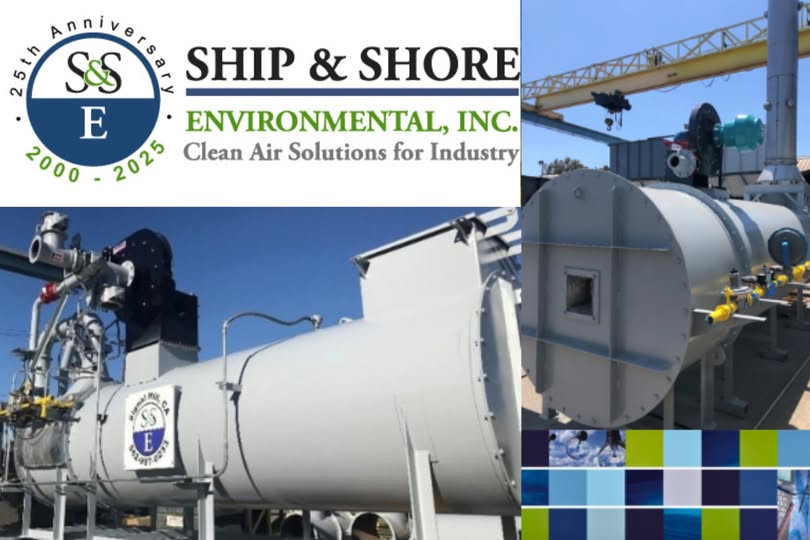
RTOs are widely used for VOC and odor control because they thermally oxidize organic compounds while recovering heat through ceramic media, reducing supplemental fuel demand.
Wet scrubbers can be effective for water soluble gases, particulate, and certain odor compounds, while carbon adsorption or biofiltration may suit other streams. Pretreatment can protect downstream equipment from moisture, fats, or particulate.
Technology selection should be based on contaminant chemistry, concentration, airflow, moisture, particulate loading, and required removal efficiency.
Engineering Beyond Compliance
Successful air pollution control requires more than installing equipment. Capture design, exhaust characterization, permitting, energy recovery, and future production needs influence lifecycle performance.
Ship & Shore Environmental provides engineered solutions from process evaluation and collection-system design through permitting, equipment integration, startup, and aftermarket service. Where available, utility incentive programs for energy-efficient equipment can also help reduce capital costs.
Clean air is more than a compliance objective it is an opportunity to improve reliability, efficiency, and long-term operating value.
📞 Contact us at +1 (562) 997-0233
📧 Email: service@shipandshore.com
Categorised in: #CleanAirSolutions, #MadeInAmerica, #VOC Control, Ship & Shore, Technical, TechTalk, ThermalOxidizer, VOC Abatement