#TechTalk: Clean Air Starts Where Escape Ends
May 27, 2026 7:56 am#TechTalk: Clean Air Starts Where Escape Ends
May 27th, 2026
Industrial coating, printing, laminating, and converting processes generate Volatile Organic Compounds (VOC) that can migrate into workspaces and atmosphere if not properly contained, creating compliance and operational risks.
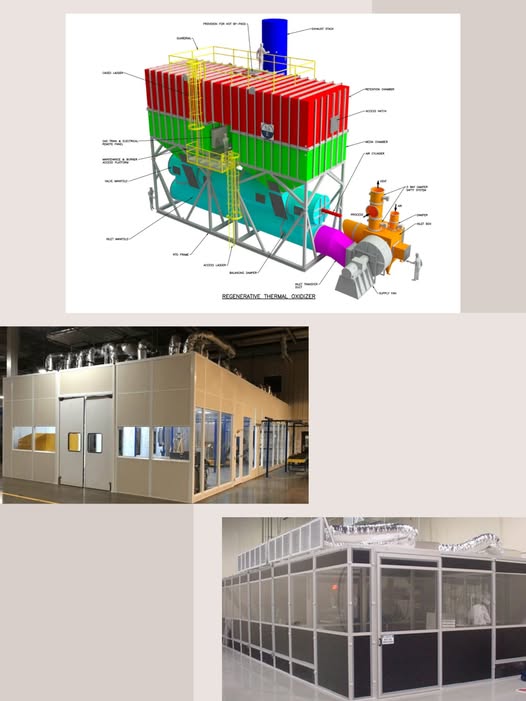
To control this, EPA developed Permanent Total Enclosure (PTE) requirements under Method 204. A PTE is designed to fully surround emission sources and direct all contaminated air to a control device. When criteria are met, capture efficiency is considered essentially complete, shifting focus to destruction performance.
Core Engineering Principle
A PTE is not just physical structure—it is a controlled airflow system. Its performance depends on pressure balance, enclosure integrity, and directional airflow working together as one system.
If these elements are not aligned, emissions can bypass capture and reduce system reliability.
- stable emission containment
- reduced fugitive release potential
- improved operational safety conditions
- consistent ventilation behavior
- higher capture reliability
- openings positioned away from emission sources
- limited natural draft opening area
- inward airflow through all openings
- closed access points during operation
- full routing of captured air to treatment equipment
📞 Contact us at +1 (562) 997-0233
📧 Email: service@shipandshore.com
Categorised in: #CleanAirSolutions, #MadeInAmerica, #VOC Control, Ship & Shore, Technical, TechTalk, ThermalOxidizer, VOC Abatement