
Best Practices to Reduce Carbon Footprint for Flexographic and EPS Manufacturers
June 1, 2026 2:26 pmBest Practices to Reduce Carbon Footprint for Flexographic and EPS Manufacturers
For flexographic printing and expanded polystyrene (EPS) manufacturers, carbon footprint reduction is no longer just a sustainability initiative. It is tied directly to operating cost, plant efficiency, customer expectations, and long-term regulatory readiness.
Facilities in these sectors often rely on energy-intensive production equipment, drying systems, steam or hot water loops, and volatile organic compound (VOC) control equipment. That makes heat and energy recovery one of the most practical places to start. In many plants, useful thermal energy is already being generated every day, but not all of it is being captured, redirected, or put back to work.
Ship & Shore Environmental works with manufacturers to evaluate energy flow, reduce unnecessary fuel and electrical consumption, and identify opportunities for heat recovery and heat exchanger systems that support cleaner, more efficient operations.
Start With the Heat Already in Your Plant
One of the most important questions for any flexographic or EPS facility is simple: Do you capture all the waste heat in your plant?
Thermal oxidizers, dryers, curing operations, boilers, and other process equipment can produce significant exhaust heat. When that heat is released without recovery, the facility may be paying for energy twice: once to generate heat for production or VOC destruction, and again to heat air, water, oil, or process streams elsewhere in the plant.
A heat recovery assessment can help determine where high-value heat is being lost and whether it can be recovered for practical use. Depending on the process, recovered heat may support incoming process air preheating, plant makeup air, oven or dryer support, hot water, steam generation, hot oil systems, or other facility heating needs.
Use Heat Recovery to Reduce Fuel Demand
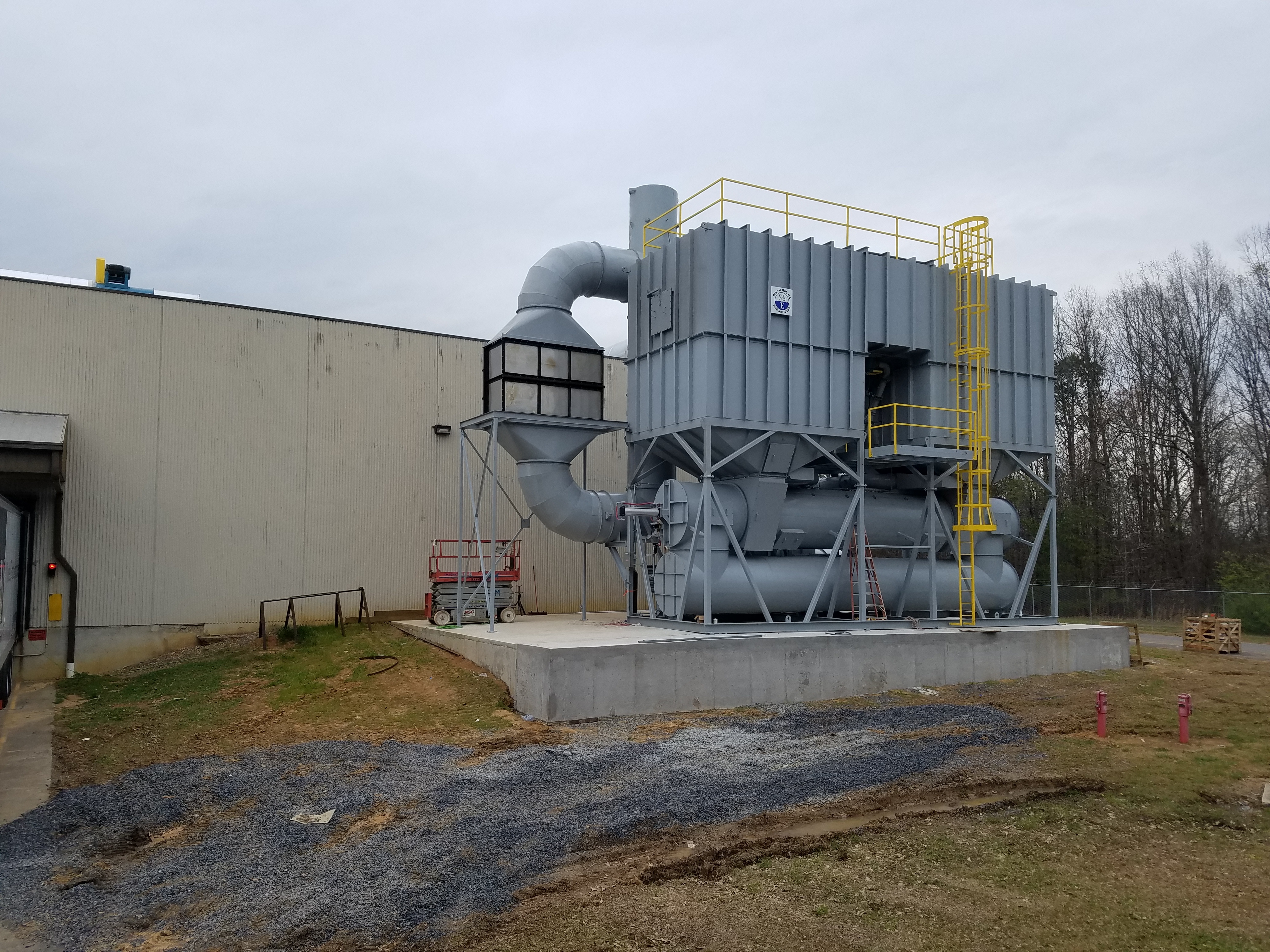
Fuel consumption is often one of the clearest targets for carbon footprint reduction. In VOC abatement applications, regenerative thermal oxidizers (RTOs) already provide primary heat recovery by capturing heat from combustion exhaust and using it to preheat incoming process air. For many manufacturing plants, secondary heat recovery can go a step further by capturing additional exhaust heat for other uses.
For flexographic printers, this may mean evaluating dryers, solvent-laden exhaust streams, and oxidizer exhaust to determine whether recovered heat can reduce the load on other heating equipment. For EPS manufacturers, it may mean examining steam, process heating, and VOC control systems together instead of treating each utility or production area separately.
The goal is not simply to install more equipment. The goal is to bring back as much useful heat from the plant as possible and redirect it where it improves efficiency, reduces natural gas use, and supports production reliability.
Evaluate Gas and Electrical Consumption Together
Carbon footprint reduction is most effective when gas and electrical consumption are reviewed together. A plant may reduce burner demand through better heat recovery, but still lose efficiency through oversized fans, unnecessary airflow, poor duct balance, aging controls, or equipment that runs harder than the process requires.
Best practices include reviewing airflow requirements, pressure drops, fan operation, motor efficiency, burner performance, insulation, control sequences, and production schedules. Small inefficiencies can add up quickly in facilities that operate long shifts or continuous production lines.
For manufacturers with existing oxidizers, a system audit can identify whether the equipment is still operating as designed, whether process changes have shifted the original operating assumptions, and whether upgrades could reduce utility demand without compromising VOC destruction performance.
Match the Solution to the Manufacturing Process
Flexographic and EPS operations have different production realities, but both benefit from custom engineering. A generic approach to energy recovery can miss the details that determine whether a project will perform well over time.
Important design factors include exhaust temperature, airflow volume, VOC loading, moisture content, production variability, available space, duct routing, safety requirements, maintenance access, and the facility’s existing utility systems. A solution provider for heat and energy recovery should evaluate the full process before recommending a specific heat exchanger, secondary recovery system, oxidizer upgrade, or control strategy.
This is where Ship & Shore can help. By looking at the relationship between VOC abatement, process exhaust, plant utilities, and facility heating needs, manufacturers can identify improvements that support both emissions compliance and energy reduction.
Turn Energy Audits Into Practical Upgrades
A strong carbon reduction plan starts with data. Before investing in major upgrades, manufacturers should understand where energy is being used, where heat is being exhausted, and where recovered energy could have the highest value.
- Review current gas and electrical consumption by production area.
- Identify major sources of waste heat, including oxidizer exhaust and process exhaust.
- Determine whether recovered heat can support incoming air, process heating, water, steam, or hot oil needs.
- Evaluate whether existing oxidizer controls, fans, burners, and heat recovery media are operating efficiently.
- Prioritize upgrades that reduce energy use while maintaining compliance, uptime, and product quality.
In some cases, improvements may include operational adjustments or control optimization. In others, the best path may be secondary heat recovery, a heat exchanger, media replacement, equipment modernization, or a new system designed around current production needs.
A More Efficient Plant Starts With the Right Questions
For flexographic and EPS manufacturers, reducing carbon footprint does not have to begin with guesswork. It begins with asking the right operational questions:
- Do you capture all the waste heat in your plant?
- Do you bring back all the heat from your plant that can be reused?
- Are you efficient in both gas and electrical consumption?
- Is your VOC control system optimized for today’s production demands?
- Could recovered heat reduce the load on other plant utilities?
Ship & Shore Environmental can help answer these questions through system evaluation, engineering support, and heat and energy recovery solutions designed for industrial manufacturing environments.
To learn more about capturing and reusing valuable process heat, visit Ship & Shore’s Heat Recovery / Heat Exchanger page or contact the team to discuss your facility’s energy reduction opportunities.
Categorised in: Blog, Energy, Flexographic