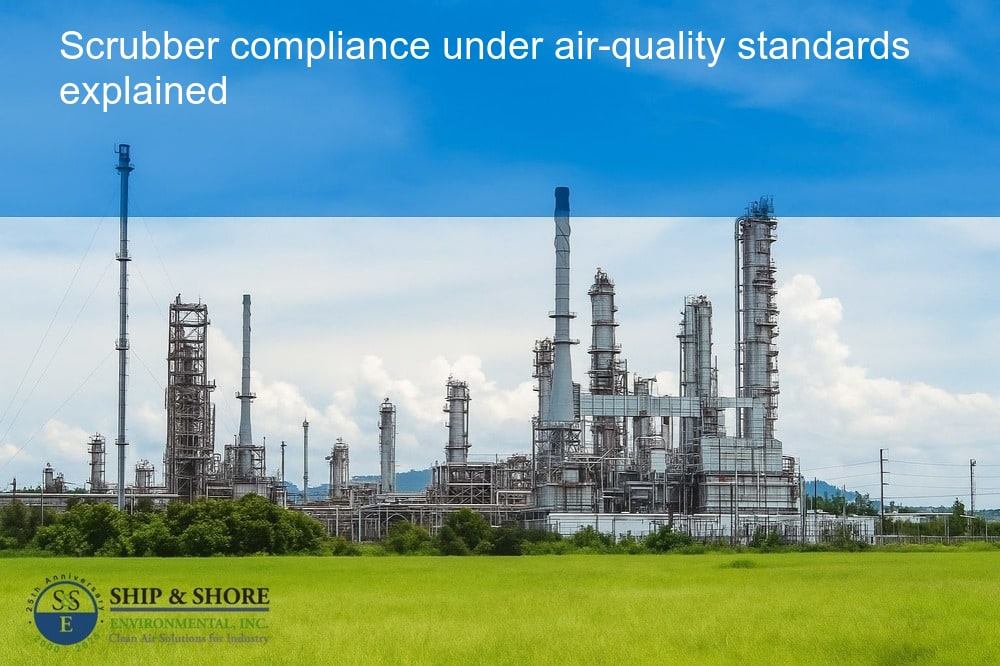
Scrubber compliance under air-quality standards explained
May 6, 2026 9:51 amAir Quality Standards and Scrubber Compliance: What Every Industry Needs to Know
As leaders in environmental engineering at Ship & Shore Environmental, we understand the complexities industries face when dealing with air pollution regulations. Scrubber compliance under air-quality standards is a central issue for many of our clients aiming to protect public health, stay competitive, and avoid legal penalties. Air emissions regulations continue to evolve, impacting manufacturers, energy producers, and process industries. Facilities are challenged not only to meet rigid emission limits but also to adopt technologies that offer lasting solutions. Understanding scraper technology, its regulatory context, and best practices is key for organizations determined to achieve environmental goals and regulatory success.
Demystifying Scrubber Technology and Its Impact on Emission Reduction
Scrubbers have become essential components in industrial air pollution control, enabling industries to stay ahead of air emission standards. These systems capture and neutralize harmful particles, gases, and volatile organic compounds before they are released into the atmosphere. There are two main types—wet scrubbers and dry scrubbers. Each operates differently, with wet scrubbers using liquid solutions to absorb pollutants, while dry scrubbers use dry reagents or filters.
The U.S. Environmental Protection Agency acknowledges scrubber systems as proven, effective air pollution control technologies. For industries, achieving and maintaining scrubber compliance under air-quality standards often begins with selecting the right scrubber system for their process. Factors like the type of contaminant, gas stream characteristics, and regulatory limits guide design choices. Our team at Ship & Shore Environmental assists clients in selecting and engineering optimal scrubber solutions. Learn more about our scrubber systems and their diverse applications.
The primary function of scrubbers is to remove contaminants such as acidic gases (SO2, HCl), particulate matter, and toxic compounds. With increasingly stringent air quality regulations, scrubbers play an ever-growing role in ensuring regulatory compliance. High-performance scrubber systems help facilities reduce their emissions footprint and support the movement toward greener, cleaner industrial operations.
Scrubber Compliance Under Air-Quality Standards: Key Steps and Challenges
To meet the demand for cleaner air, regulatory agencies set limits defined by the National Ambient Air Quality Standards (NAAQS) and industry-specific Maximum Achievable Control Technology (MACT) standards. Achieving scrubber compliance under air-quality standards requires a systematic approach, involving technology selection, engineering design, installation, testing, and ongoing monitoring.
Industries encounter several challenges during this journey. Some of the most common include managing multi-pollutant streams, retrofitting existing facilities, integrating new technologies with current operations, and keeping pace with shifting federal, state, and local requirements. For instance, facilities may need to evaluate whether to invest in wet or dry scrubber systems or consider hybrid approaches.
One of the more demanding aspects is documentation and reporting. Facilities must regularly report performance metrics and emissions data to regulatory authorities. Any deviation from permitted levels can trigger audits or penalties. For this reason, robust recordkeeping and proactive system maintenance are essential practices for maintaining compliance. Partnering with an experienced environmental engineering firm like Ship & Shore Environmental can make a measurable difference.
Our expertise spans VOC abatement engineering and holistic air pollution control, allowing us to provide tailored solutions for complex emissions requirements. We also offer consultation on permitting, helping companies navigate new source review and Title V requirements. Get in touch with us if your facility needs a compliance assessment or system upgrade.
Key Steps to Ensure Scrubber Regulatory Compliance
- Conduct a detailed emissions analysis to identify contaminants and concentrations
- Select, design, and install an appropriate scrubber system matching process requirements
- Integrate process monitoring controls for real-time performance feedback
- Develop an inspection, maintenance, and recordkeeping protocol
- Perform regular performance tests to confirm removal efficiencies meet permitted limits
- Maintain clear documentation for regulatory submissions and audits
In addition, facilities must stay alert for updates or changes to local Air Quality Management District (AQMD) rules and new federal MACT standards, which can change allowable emission thresholds with little advance notice.
Best Practices for Maintaining Scrubber Compliance Under Air-Quality Standards
Once a scrubber system is operational, the work of maintaining compliance intensifies. Long-term scrubber compliance under air-quality standards is not a static achievement. Instead, it requires vigilance, frequent adjustments, and ongoing education. At Ship & Shore Environmental, we emphasize that effective maintenance starts with a combination of predictive and preventive strategies.
Regular inspections—combined with predictive diagnostics—allow facilities to spot early signs of system wear, plugging, or failure. By keeping flow rates, recirculation, reagent levels, and media in optimal condition, operators can avoid out-of-compliance events. Recordkeeping is equally crucial; we recommend comprehensive logs that document performance data, calibrations, maintenance activities, and equipment upgrades. This data is invaluable not just during regulatory audits, but for tracking long-term system efficiency and cost trends.
Systems integrated with real-time monitoring controls (such as pH sensors, pressure drop monitors, and flow meters) facilitate instant feedback, empowering plant personnel to make timely corrections. When properly implemented, these controls quickly alert operators to subpar performance, reducing the chance of unpermitted emissions.
Operator training is another high-impact area. Frequent, hands-on training improves staff response to emergencies, trouble-shoots issues, and fosters a safety-first culture. Given the complexity of modern scrubber controls, updating training materials to reflect equipment upgrades and regulatory shifts is important. Ship & Shore Environmental offers a full suite of air pollution abatement system design and operational support services, ensuring robust performance for years to come.
Lastly, proactive engagement with regulatory agencies pays dividends. Building an open, proactive relationship with your local air district makes it easier to update permits, respond to inquiries, and demonstrate good-faith compliance efforts.
Evaluating Scrubber Regulatory Requirements and Addressing Industry Challenges
Understanding the specific regulatory framework is a foundational element of scrubber compliance under air-quality standards. Agencies such as the U.S. Environmental Protection Agency, state air boards, and local agencies all play a role. The exact requirements vary based on industry, the nature of air contaminants, facility location, and the scale of emissions.
Most industrial facilities must comply with National Emission Standards for Hazardous Air Pollutants (NESHAP), New Source Performance Standards (NSPS), and local environmental regulations. Each set of rules may dictate specific monitoring, recordkeeping, control efficiencies, and reporting intervals. Facilities subject to Title V operating permits must demonstrate continuing compliance, not just initial success. This means regular performance testing, thorough reporting, and timely submission of deviations or incidents.
Challenges arise when regulations update faster than systems can adapt, or when multiple agencies enforce overlapping, sometimes conflicting, emission limits. We help our clients by providing system updates, engineering reviews, and ongoing consultation to reduce uncertainty and streamline compliance processes.
To ensure facilities meet and exceed the latest standards, we draw on trusted technical resources, including government manuals and engineering guidance. For a deeper dive into wet and dry scrubber design and compliance, we recommend referencing the EPA’s guidance on wet and dry scrubber systems and compliance strategies.
Choosing a partner with multi-disciplinary expertise, like Ship & Shore Environmental, equips facilities to meet current and future demands.
Future Trends in Air Quality Enforcement and Scrubber Use
Environmental expectations are rising. As communities, investors, and governments put pressure on industries to reduce pollutants, air quality enforcement will continue to tighten. Technologies and strategies for scrubber compliance under air-quality standards are evolving in tandem with regulations.
Digital transformation is driving the adoption of smart scrubber controls and AI-based monitoring, empowering facilities to optimize performance while reducing costs and risks. As real-time data capture and automated alerts become standard, we expect increased demand for integrated emission abatement solutions that combine scrubbers with thermal oxidizers and catalytic systems. Learn about our comprehensive offerings by visiting Ship & Shore Environmental.
Industry best practices now emphasize life-cycle assessments and sustainability reporting. Regulatory agencies are raising expectations for transparency, requiring substantive proof of performance and effective controls. As carbon capture regulations become mainstream, future air quality compliance may require integrating carbon capture modules into existing abatement systems.
To address these trends, we anticipate expanded use of modular, scalable scrubber platforms and advanced remote diagnostic services. Our own R&D team is actively engineering solutions to support zero net air emissions and higher efficiency standards. Staying proactive and investing in emerging control technologies will be critical to industry leaders who want to future-proof their operations.
For facilities operating in high-impact or non-attainment air basins, forward planning will be necessary to avoid costly compliance gaps. By engaging in early technology assessments, regulatory due diligence, and expert system review, industries position themselves ahead of enforcement actions and public scrutiny.
Elevate Your Environmental Performance—Partner with Ship & Shore Environmental
Maintaining scrubber compliance under air-quality standards requires diligence, technical understanding, and a commitment to continuous improvement. The regulatory landscape is complex, but with expert guidance, robust scrubber technology, and a focus on proactive best practices, organizations can successfully meet and exceed environmental goals. Our experience at Ship & Shore Environmental gives us a unique perspective on the challenges and solutions involved in achieving air quality compliance.
If your facility faces new emission limits, is considering an equipment upgrade, or wants to audit existing controls, we’re here to help. Explore our range of scrubber solutions, integrated VOC abatement engineering, and specialized system design services tailored to the most demanding industry needs.
Staying compliant is not just about meeting legal limits—it’s about corporate responsibility and protecting our shared environment. At Ship & Shore Environmental, we’re committed to partnering with you on the path to cleaner operations, sustainable growth, and long-term regulatory confidence.
Contact us today via our contact page to discuss your compliance goals, arrange a site assessment, or request a custom engineering proposal. Let our expertise in scrubber compliance under air-quality standards help you secure a cleaner, safer future for your business and community.
FAQ
What is scrubber technology, and how does it help industries?
Scrubber technology is designed to remove pollutants from industrial exhaust streams, effectively supporting cleaner air. By using liquid or dry substances to capture and neutralize contaminants, scrubbers play a key role in reducing emissions and ensuring industries meet regulatory expectations. At Ship & Shore Environmental, we help our clients select the right scrubber systems tailored to their specific needs.
How do scrubber systems support compliance with air-quality standards?
Scrubber compliance under air-quality standards is crucial for meeting local and federal environmental laws. Moreover, using scrubber systems allows industries to control harmful emissions before they reach the atmosphere. Our team assists clients in understanding compliance requirements and implementing solutions that align with current standards.
What are the key steps to ensure scrubber compliance under air-quality standards?
Ensuring compliance involves a series of proactive steps. For example, we recommend regular performance assessments, maintaining thorough records, and promptly addressing any operational issues. In addition, Ship & Shore Environmental provides ongoing training and support to help clients stay up-to-date with evolving regulations.
What challenges might industries face with scrubber regulatory requirements?
Industries often encounter challenges such as evolving regulations, technical complexities, and high operational costs. However, with our expertise and guidance, we help businesses navigate these hurdles by offering tailored solutions and up-to-date information to streamline compliance efforts.
How can best practices improve long-term scrubber compliance and performance?
Adopting best practices—like routine monitoring, scheduled maintenance, and staff training—ensures ongoing scrubber efficiency as well as compliance. Furthermore, staying proactive helps businesses avoid fines and contribute to a cleaner environment in the long term.
Categorised in: Blog