#TechTalk: Integration of Regenerative Thermal Oxidation Systems in Expanded Polystyrene Manufacturing for VOC Compliance
January 28, 2026 9:22 am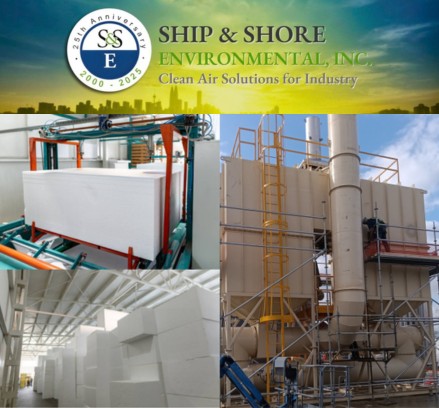
#TechTalk: Integration of Regenerative Thermal Oxidation Systems in Expanded Polystyrene Manufacturing for VOC Compliance
January 28, 2026
Expanded Polystyrene (EPS) is a lightweight, closed-cell foam material valued for its thermal insulation, energy absorption, and structural performance. While traditionally used in protective packaging, EPS is now widely applied in engineering and construction markets, replacing heavier, labor-intensive materials. Common applications include architectural components, automotive panels, lost-foam casting patterns, geofoam for civil engineering, flotation systems, and impact-mitigation products.
EPS manufacturing inherently generates volatile organic compound (VOC) emissions, primarily pentane, released during bead expansion, drying, molding, storage, and aging operations. As air quality regulations tighten and permit thresholds become more restrictive, manufacturers must implement abatement technologies capable of achieving high destruction efficiencies while maintaining reliable operation and controlled operating costs.
Effective emissions control in EPS facilities requires process-specific solutions due to variability in airflow volumes, VOC concentrations, and operating schedules across production stages. Typical emission sources include raw bead storage and handling, bead transfer to hoppers, pre-expansion units, fluidized bed dryers, block and shape molding operations, pre-expanded bead silos, and aging or conditioning rooms. Each source presents a distinct emissions profile influenced by pentane concentration, temperature, airflow rate, and duty cycle, all of which directly impact system sizing, heat recovery design, and control strategy.
Regenerative Thermal Oxidizers (RTOs) are widely used in EPS manufacturing because they consistently achieve VOC destruction efficiencies greater than 98% at oxidation temperatures near 1500°F. RTO technology is particularly effective for pentane-rich exhaust streams, as recovered thermal energy can support self-sustaining operation under normal production conditions, significantly reducing supplemental natural gas consumption.
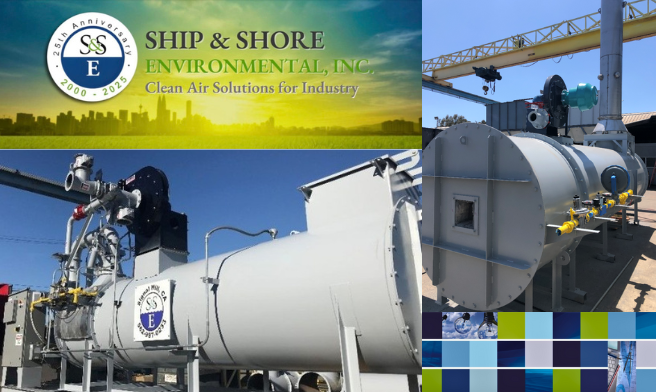
A typical Ship & Shore Environmental RTO system for EPS applications includes engineered process ductwork to balance variable airflows, pre-filtration to prevent bead carryover, high-efficiency inlet fans, dual ceramic heat exchange chambers for energy recovery, a central combustion chamber for VOC oxidation, automated poppet valves for airflow switching, and a compliant exhaust stack.
Facility expansions, production increases, or process changes often require new or upgraded abatement infrastructure. System selection must therefore consider future flexibility, maintenance access, equipment durability, and total lifecycle cost in addition to immediate regulatory compliance.
📞 Contact us at +1 (562) 997-0233
📧 Email: service@shipandshore.com
Categorised in: #CleanAirSolutions, #MadeInAmerica, #VOC Control, Ship & Shore, Technical, TechTalk, ThermalOxidizer, VOC Abatement