CASE STUDY – Restoring RTO Ceramic Media Performance in a Flexographic Printing Facility
March 25, 2026 8:11 pm
CASE STUDY – Restoring RTO Ceramic Media Performance in a Flexographic Printing Facility
March 25, 2026
Overview
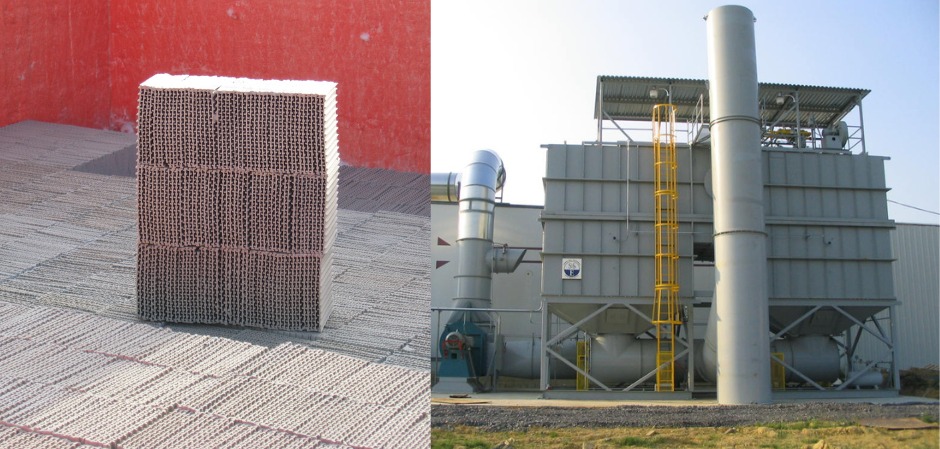
A high-production flexographic printing facility engaged Ship & Shore Environmental after experiencing declining RTO performance and rising operating costs. The plant operated multiple printing and laminating lines and had recently introduced new ink systems and solvent blends, resulting in changes to VOC loading and exhaust composition.
Operators observed increasing pressure drop across the RTO chambers, reduced airflow, and higher consumption of both natural gas and electrical power. These conditions reduced system efficiency and raised concerns regarding consistent VOC destruction and regulatory compliance.
Root Cause Analysis
Ship & Shore Environmental performed a comprehensive inspection and system evaluation. The assessment identified several key factors impacting performance:
- Accumulation of ink particulates and condensable vapors within the ceramic media beds, restricting airflow
- Localized plugging and channeling, leading to uneven air distribution and reduced heat recovery
- Early-stage chemical degradation in sections of the media due to exposure to aggressive solvent compounds
These conditions limited volumetric flow through the oxidizer and reduced thermal efficiency, forcing the system to consume more energy to maintain required operating temperatures.
Solution Provided
Ship & Shore implemented a targeted recovery strategy:
- Media Wash-Out
The RTO was safely cooled and taken offline. A controlled, low-pressure, high-volume wash removed accumulated particulate and condensable residues from the ceramic media. Wastewater was contained and managed by environmental standards. - Controlled Bake-Out
A structured thermal bake-out was conducted to eliminate residual organic deposits. Extended valve cycling ensured uniform heat penetration throughout the media beds, allowing complete oxidation of remaining contaminants without inducing thermal stress. - Preventive Strategy
Recommendations included routine pressure drop monitoring, scheduled inspections, and evaluation of process changes such as new inks or solvents. Guidance for long-term media maintenance and replacement planning was also provided.
Results Achieved
- Reduced pressure drops across ceramic media beds
- Restored airflow and system balance
- Improved heat recovery and reduced fuel demand
- Lower electrical and natural gas consumption
- Maintained VOC compliance and stable operation
Conclusion
This case highlights the importance of ceramic media condition in maintaining RTO efficiency within flexographic operations. Ship & Shore Environmental’s aftermarket services include washouts, bakeouts, and preventive maintenance helps facilities sustain performance, reduce costs, and ensure long-term compliance.
📞 Contact us at +1 (562) 997-0233
📧 Email: service@shipandshore.com
Categorised in: Case Study & White Papers, News, News, VOC Abatement